
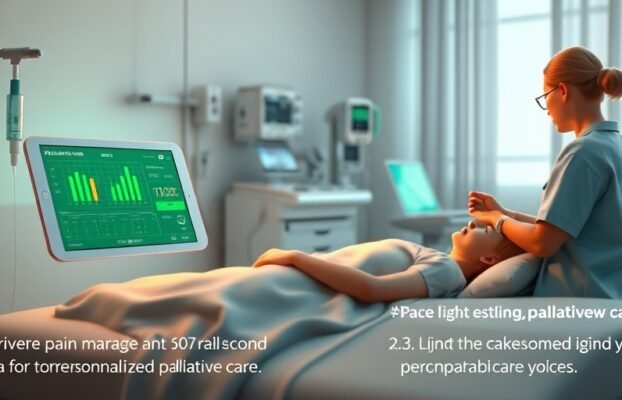
Ethical considerations of AI integration in palliative care: a qualitative study.
April 3, 2026Exploring AI's role in palliative care ethics: insights from Qiu et al.'s qualitative study. 🤖💔


Robotic rehabilitation and intelligent algorithms improving the performance skills of stroke patients: a scoping review.
April 3, 2026Robotic rehab boosts stroke recovery: improved hand strength, dexterity, and ROM. Key gaps remain in cost and accessibility. 🤖💪

Physician Gestalt Compared With Artificial Intelligence Model to Predict Intubation in Critically Ill Patients.
April 3, 2026Physician predictions vs. AI for intubation: 19% sensitivity vs. 71% 🩺🤖. Confidence boosts accuracy! 📈

Multimodal AI for Alzheimer Disease Diagnosis: Systematic Review of Datasets, Models, and Modalities.
April 2, 2026Multimodal AI enhances Alzheimer’s diagnosis accuracy to 92.5% 📊, integrating diverse datasets for improved outcomes. 🧠

AI-Powered Clinical Decision Support in Dentistry: Comparative Evaluation of Large Language Models for Oral Medicine and Periodontal Diagnosis.
April 2, 2026AI in Dentistry: ChatGPT Outperforms Copilot & Gemini in Oral Diagnosis! 📊🦷 4.846 vs. 4.433 & 4.234 scores!
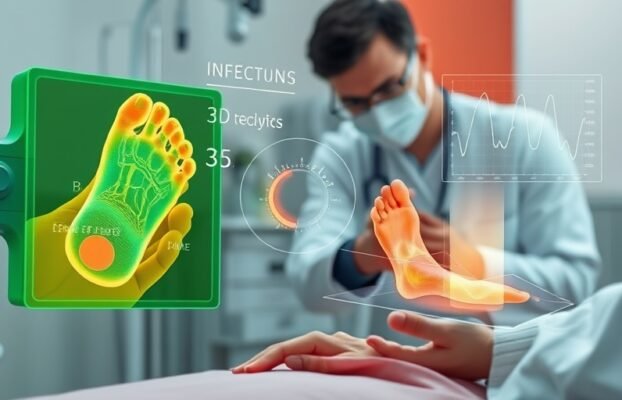
Clinical applications of machine learning for infection assessment in diabetic foot ulcers.
April 1, 2026Machine learning enhances diabetic foot ulcer infection detection, reducing diagnostic variability and supporting timely interventions. 📈🦶

Hertfordshire Community NHS Trust Implements AI-Powered Voice Technology
April 1, 2026Hertfordshire Community NHS Trust introduces AI voice technology to enhance community and mental health services. 🏥💬

Deep learning-based infrared thermography reveals reproducible uniform and individual thermoregulatory responses during running.
April 1, 2026Deep learning in infrared thermography shows consistent thermoregulatory responses during running. Key metrics reveal individual variations. 📊🏃♂️

AI-Generated Exercise Prescriptions for At-Risk Populations: Safety and Feasibility of a Large Language Model Assessed by Expert Evaluation.
April 1, 2026AI-generated exercise prescriptions show potential but lack expert consensus. Safety scores improved with structured prompts. 📊🤖