 Yusuf Yesil, MD, MIS
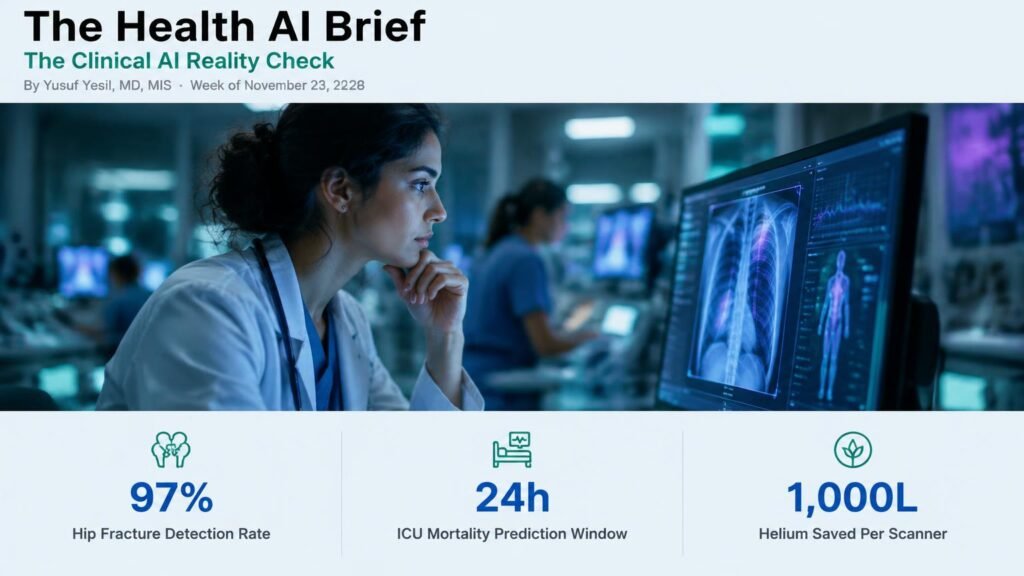
This week revealed a stark truth: impressive AUCs mean nothing if our models fail outside their home hospital or drown clinicians in high false-positive noise.
🔹 AI Catches 97 Percent of Emergency Hip Fractures — A commercial AI screens emergency hip X-rays with 97% sensitivity, but moderate specificity adds review overhead.
High sensitivity is great in the ED, but as a physician, I worry about alert fatigue if every minor suspicion requires senior radiologist signoff.
🔹 Simple Algorithm Predicts Fungal Infection Mortality in ICU — A basic logistic regression model beat complex deep learning architectures to flag high-risk ICU patients within 24 hours.
When I build models, I constantly remind myself that interpretable, simpler algorithms often beat black-box neural networks in clinical utility.
🔹 Helium-Free 3T MRI Scanners Target Clearance — Scanners eliminating 1,000 liters of liquid helium address supply chain headaches, though throughput remains the chief hurdle.
Hardware innovations like this are essential infrastructure upgrades for AI-driven image pipelines to scale globally without resource bottlenecks.
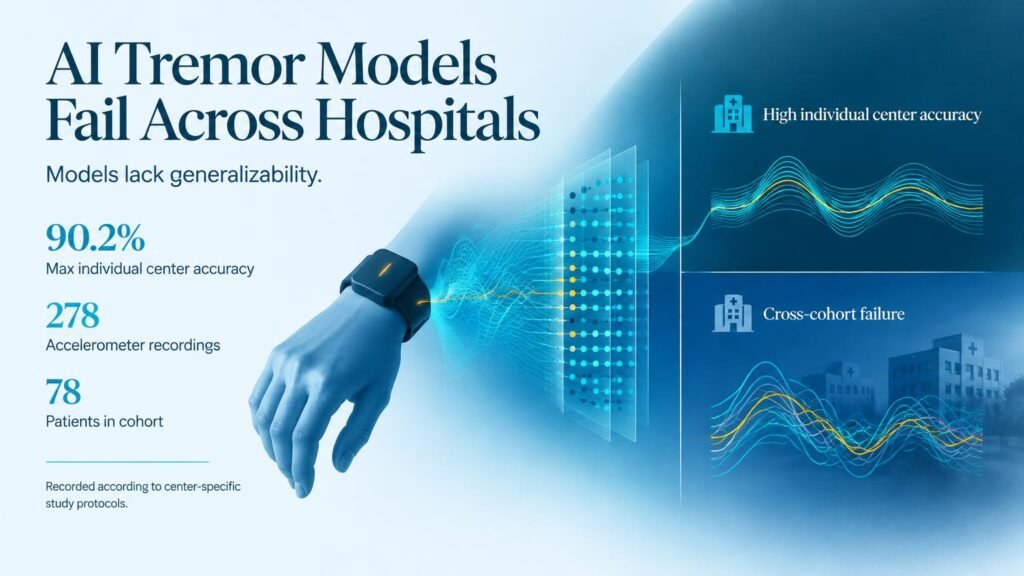
🔹 AI Tremor Models Fail Across Different Hospitals — Algorithms distinguishing essential tremor from dystonic tremor collapse when validated on external center data.
Domain shift is the silent killer of health AI startups; if your pipeline isn’t tested cross-site early, it’s just a localized demo.
🔹 AI Scribes Facing Strict Medical Device Rules — Regulators are scrutinizing clinical transcription tools, signaling that dozens may act as unapproved medical devices.
If you’re building scribes, real-time clinical summarization rapidly crosses the line into diagnostic support—prepare your regulatory strategy now.
🔹 AI discharge summaries outperform doctors in London trial — Automated drafts cut downstream safety risks while earning high clinical sign-off rates in acute care trials.
Writing discharge notes consumed hours of my residency; automating draft generation safely gives doctors back critical time at the bedside.
🔹 FDA Clears AI Software for Brain Aneurysms — FDA approval shifts automated aneurysm detection software into routine diagnostic workflow support.
Direct diagnostic approval sets a high bar for clinical liability, moving these tools from secondary alerts to primary workflow drivers.
🔹 AI Chart Summaries Cut Radiologist Workloads — Automated clinical chart summaries shave crucial preparation minutes without compromising diagnostic accuracy.
Synthesizing dense patient history into actionable pre-read context is one of the highest ROI applications for LLMs in radiology today.
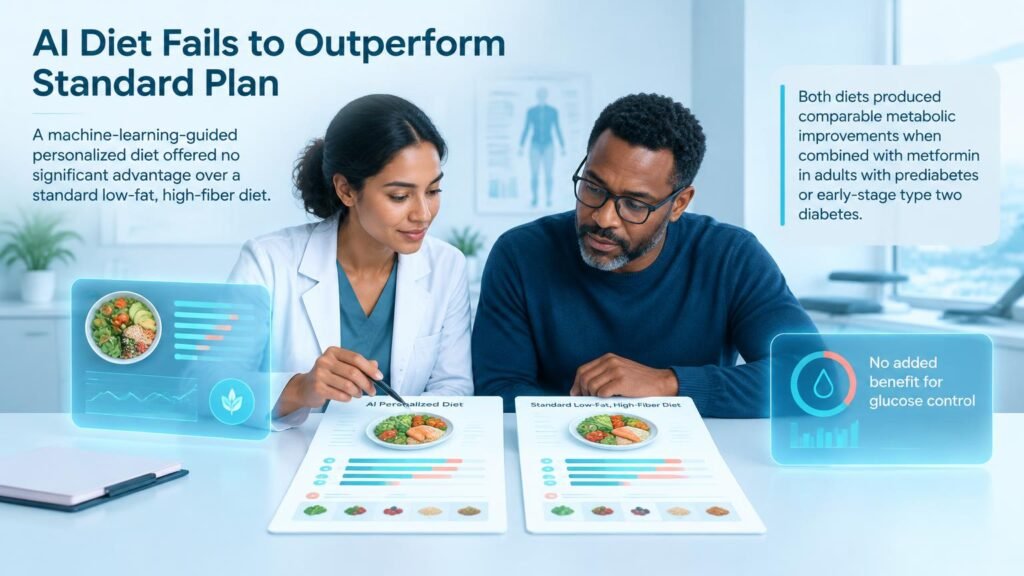
🔹 AI Diets Fail to Outperform Standard Metformin Advice — Personalised glycemic AI recommendations provided no extra metabolic benefit over standard diet advice for patients taking metformin.
We must push back on health-tech hype: algorithmic personalization isn’t inherently better than cheap, proven baseline interventions.
🔹 Computer Vision Fixes Operating Room Clock Delays — Video tracking systems match human precision in logging surgical timestamps to reduce administrative delays.
Automating passive timestamping frees circulating nurses to focus on patient safety rather than fighting with EHR entry screens.