 Yusuf Yesil, MD, MIS
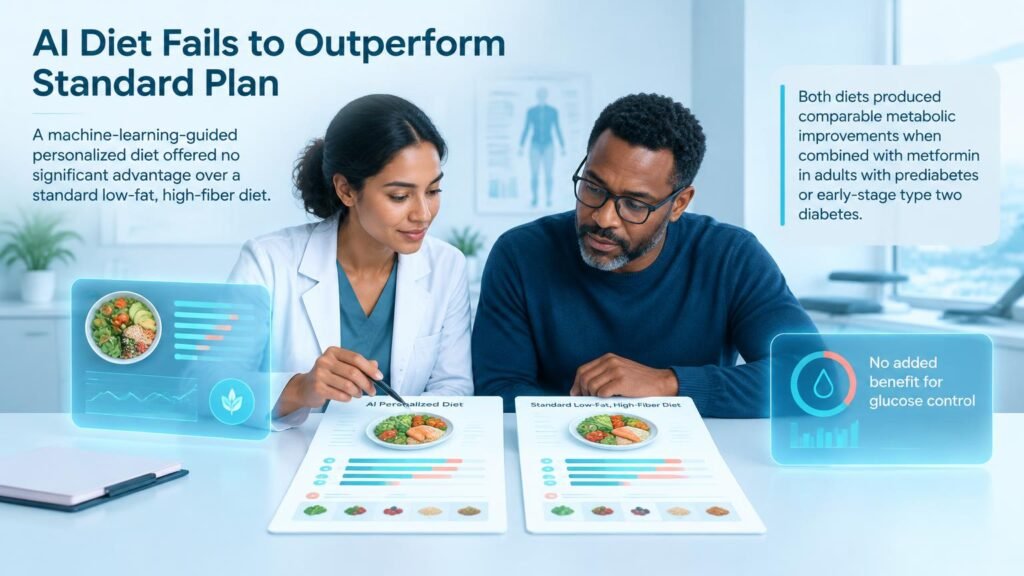
Personalized nutrition algorithms promise to optimize metabolism by predicting how individual bodies react to specific foods. Yet when stacked against a basic low-fat, high-fiber diet in patients taking metformin, high-tech meal planning loses its advantage.
The Trial Results
A randomized clinical trial of 138 adults with prediabetes or early-stage type 2 diabetes evaluated an AI-guided personalized diet against standard dietary advice over several months. Both groups took metformin.
The machine-learning algorithm slightly flattened short-term glucose spikes. However, it offered no significant advantage in overall blood glucose control, weight loss, or cardiometabolic health. Both cohorts achieved equivalent metabolic gains. Shifts in gut microbiome composition also failed to correlate consistently with better clinical outcomes.
Clinical Reality
Metformin and foundational dietary changes do the heavy lifting in early metabolic disease. While machine-learning tools can map acute glycemic responses, those minor adjustments do not automatically translate to superior clinical endpoints.
algorithmic precision cannot replace baseline medical and nutritional care. Health systems evaluating expensive digital nutrition platforms should demand proof of hard clinical outcomes, not just smoothed continuous glucose monitor curves.