A new influx of capital highlights a critical shift in oncology: precision medicine cannot work if it only understands Western DNA.
The Data Gap
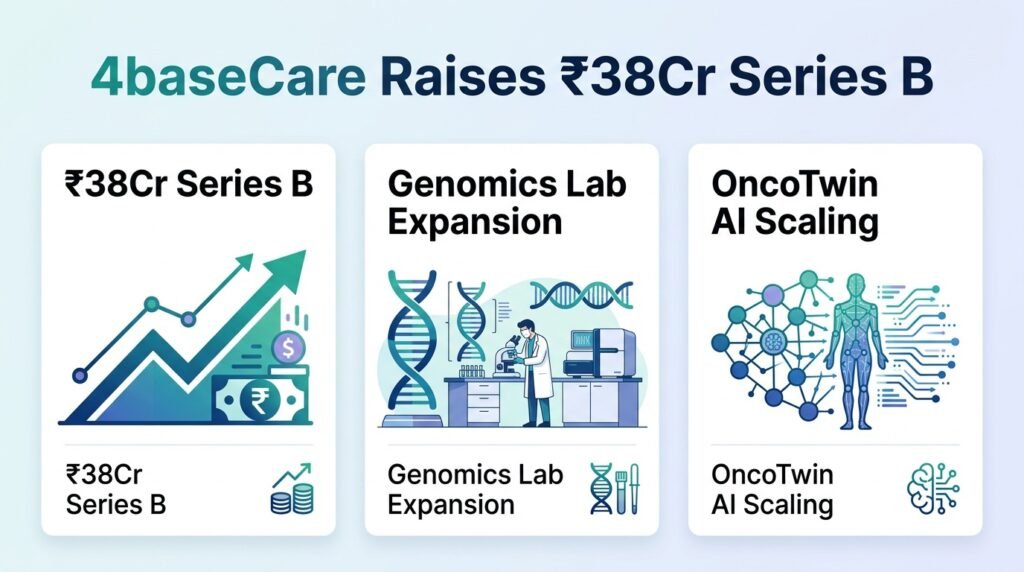
Most cancer therapies are designed using genomic data from Caucasian populations. This bias leaves patients in Asia and Latin America with treatments that may not match their genetic realities. Bengaluru-based 4baseCare just closed its Series B round at ₹128 crore, securing a ₹38 crore top-up led by growX Ventures and Infosys. The capital will fund expansion into eight to ten new countries across the Middle East, Southeast Asia, and Latin America over the next 18 months.
At the center of this expansion is OncoTwin, an AI-driven platform. By building in-hospital genomics labs in these regions, the company aims to capture local genetic profiles directly. This is not just a business expansion. It is an infrastructure play to correct a systemic imbalance in global health data. Local data means local accuracy.
The Scaling Hurdle
But scaling precision oncology is notoriously difficult. AI models are only as good as the clinical data feeding them. 4baseCare must prove its AI can translate diverse genomic sequences into actual, improved survival rates in underfunded healthcare systems. Success requires deep integration with local hospital workflows, which are rarely standardized.
This funding signals a broader surge in investor interest in India’s precision oncology sector. Yet, the real test is clinical utility. If 4baseCare succeeds, it could decentralize oncology research away from Western hubs. If it struggles, it highlights how difficult it is to turn regional genomic diversity into standardized clinical practice.