
Keeping acute stroke patients on the operating table instead of wheeling them back to radiology could shave critical minutes off brain-saving procedures.
The traditional stroke workflow is a race against a ticking clock. When a clinician needs to assess brain tissue viability during a mechanical thrombectomy, they typically must transfer the patient back to a standard CT scanner. This shuffle wastes precious minutes when millions of neurons are dying.
Zero-delay perfusion mapping
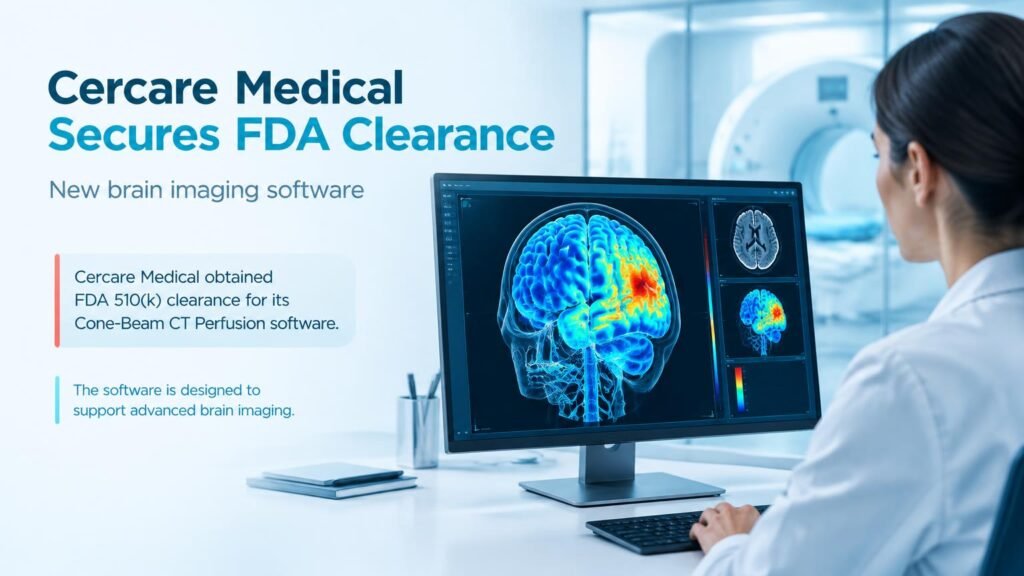
A recent FDA clearance for Cone-Beam CT perfusion software aims to eliminate this back-and-forth. The technology allows interventionalists to generate CT-quality perfusion maps directly in the angio suite using standard C-arm systems. By providing real-time, tissue-level assessments of microvascular reperfusion during the procedure, clinicians can make immediate decisions without leaving the room.
The software also measures advanced physiological biomarkers, including oxygen extraction fraction, to evaluate tissue viability on the spot. To scale this capability, the developer partnered with Siemens Healthineers to integrate the tool directly into existing imaging systems.
The workflow bottleneck
While the clinical logic is sound, the real-world impact hinges on operational integration. C-arm imaging in the angio suite has historically lacked the contrast resolution of diagnostic CT scanners. Clinicians must still validate whether these intraoperative scans match the reliability of dedicated radiology suites under high-stress emergency conditions.
The immediate takeaway is operational. Hospitals looking to optimize stroke workflows should evaluate how integrating perfusion software directly into the angio suite affects door-to-revascularization times, rather than viewing it merely as an incremental software upgrade.