A massive funding round in healthcare administration reveals that investors are betting on automated billing engines to solve the industry’s most expensive back-office headache.
The $280 billion U.S. healthcare billing market is notoriously broken. For years, legacy software and superficial AI overlays have failed to stop the endless cycle of denied claims and administrative waste. Now, venture capital is placing a massive bet on a deeper architectural fix.
The Valuation Leap
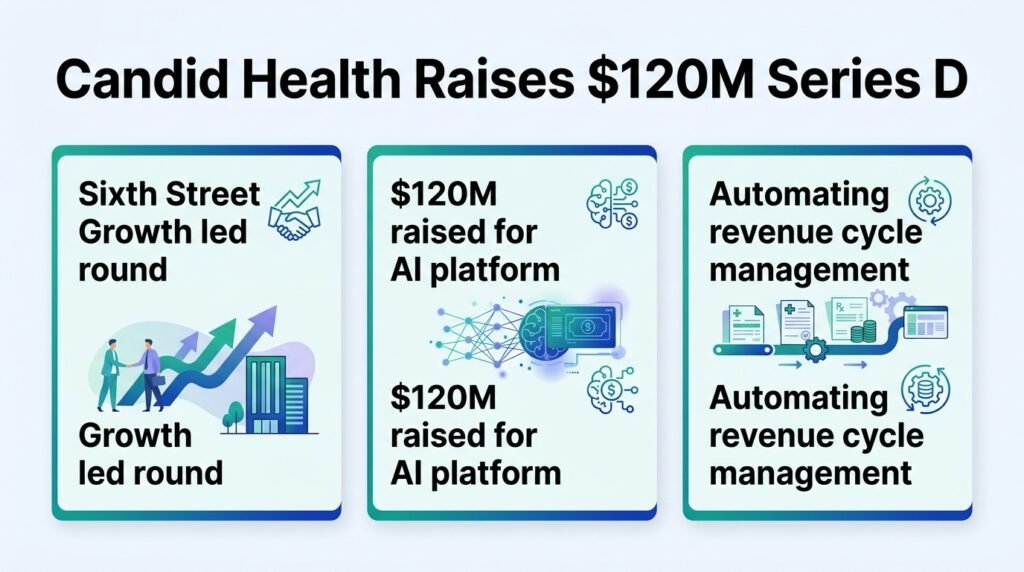
Candid Health has secured $120 million in Series D funding, tripling its valuation in just over a year. Led by Sixth Street Growth, the round follows a 190% year-over-year growth in annual recurring revenue.
This is not just another generative AI wrapper. The startup, founded by former Palantir executives, combines a strict rules engine with AI agents to automate claims across more than 1,000 insurers.
This rapid valuation spike signals a shift in investor sentiment. Generalist AI chatbots are losing their luster. Specialized agentic workflows that target concrete, high-cost administrative friction are attracting premium capital.
The Integration Challenge
But scaling automated billing is not a simple software update. Healthcare billing is a moving target of shifting insurer policies and complex clinical coding.
While Candid now serves over 200 healthcare organizations, the real test lies in legacy integration. Can AI agents truly navigate the fragmented, hostile infrastructure of legacy electronic health records?
If they can, the traditional, manual revenue cycle department is on borrowed time. If they cannot, even $120 million will not be enough to bypass the industry’s deeply entrenched gatekeepers. The race is no longer about who has the smartest model, but who can integrate deepest into the plumbing of American medicine.