Diagnostic Disparities in AI Emergency Guidance
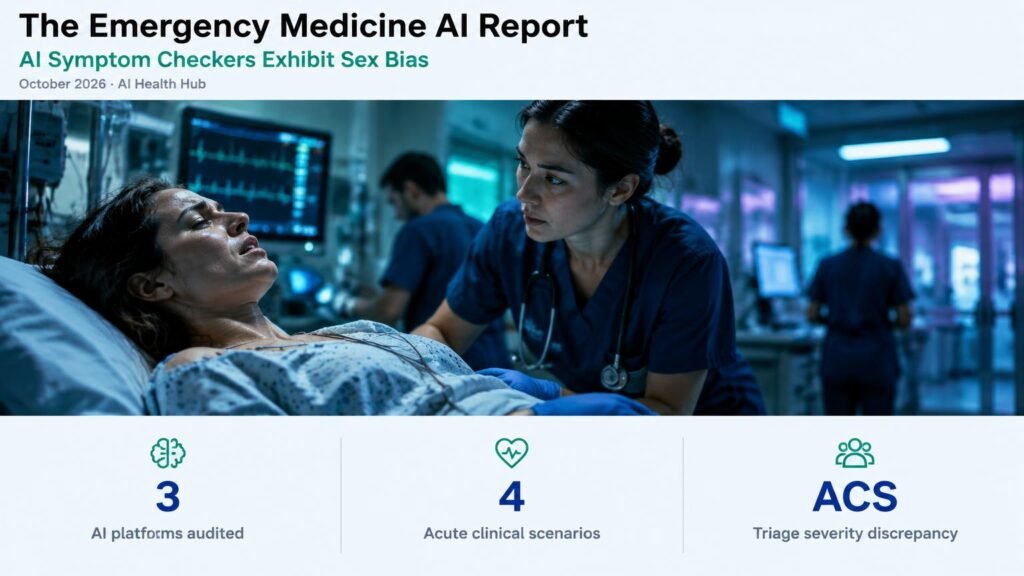
A structured audit of three widely deployed consumer AI symptom checkers—Ada Health, Isabel Healthcare, and Docus AI—revealed sex-based diagnostic disparities when evaluating identical presentations of acute clinical conditions, including acute coronary syndrome. According to findings published in Frontiers in Digital Health, variations in patient sex inputs led to differing triage urgency outputs and diagnostic differential rankings across standardized clinical vignettes.
Operational and Safety Implications for Emergency Care
Consumer AI triage tools are routinely used by millions as first-line decision aids before presenting to the emergency department. When an AI system under-triages high-acuity presentations like atypical cardiac symptoms in female profiles, patients may delay seeking emergency department evaluation. Conversely, over-triage increases avoidable emergency department visits, straining acute care capacity. The audit demonstrated that algorithmic decision-making can mirror historical clinical biases, producing inconsistent urgency scores for identical symptom complexes based solely on demographic variables.
Key Study Limitations and Clinical Takeaways
The evaluation was an exploratory audit using standardized clinical vignettes rather than real-world prospective patient care data. Synthetic scenarios cannot fully capture the complexity of patient-reported history or comorbid interactions in live emergency presentations. Emergency clinicians and health system leaders must recognize that commercial symptom checkers currently lack standardized equity validation for acute triage. Clinical operations should not rely on patient self-triage tools to streamline acute intake without robust, multi-center bias audits.