A new conversational AI designed for pediatric caregivers reduced distress in single-session testing while maintaining therapeutic standards.
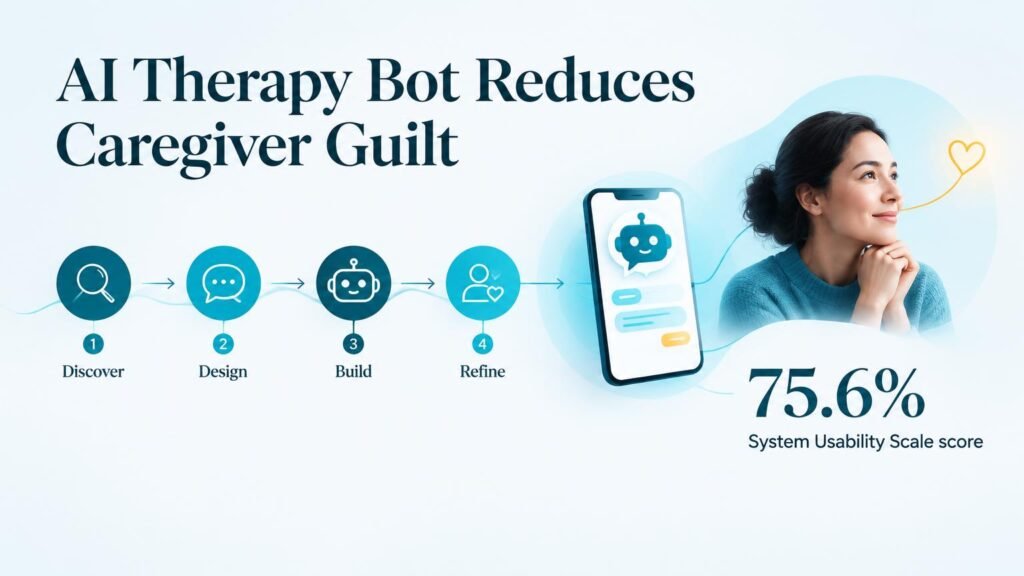
Family caregivers supporting children with chronic illnesses face persistent depression, anxiety, and sleep loss, but specialized therapy remains out of reach for most. To bridge this gap, researchers built COCO, an AI conversational agent combining problem-solving therapy and motivational interviewing. The tool relies on a human-in-the-loop framework that moved iteratively from basic rule-based scripts to a large language model.
Building safe AI for vulnerable caregivers requires testing the conversational framework before giving generative models full control.
Usability and Emotional Relief
In early testing, standardized patients praised the low-fidelity prototype for providing validating, on-demand support. Researchers then evaluated a high-fidelity prototype using a Wizard-of-Oz setup—where human operators supported the interactions behind the scenes—with 38 family caregivers completing a single problem-solving session. Caregivers rated the system’s usability with a mean System Usability Scale score of 75.6% (SD 12.9%), meeting the threshold for acceptable usability.
After completing the single session, caregivers demonstrated measurable emotional relief across several standardized metrics:
- Significant reductions in negative affect, sadness, guilt, and fatigue (P < .05).
- Creation of 4 gold-standard dialogues during initial persona development to anchor therapeutic design.
- Automated delivery achieved a density of 2.56 motivational interviewing techniques per turn in the generative phase.
From Human Supervision to LLMs
In the final phase, the team integrated GPT-4 into COCO using few-shot learning and evaluated its performance using simulated caregiver personas. The generative model delivered the highest fidelity to motivational interviewing protocols across the study. It achieved a higher balance across strategy types, particularly in seeking collaboration and providing reflection.
These results highlight a structured validation pipeline for clinical AI, but the findings come with important caveats. The emotional benefits were measured immediately after a single therapeutic session, leaving long-term clinical durability unproven. Furthermore, the generative phase was tested internally by research team members rather than active caregiving families in real-world distress.
Simulated success does not guarantee safety when an unprompted model faces an unpredictable crisis.
Health systems evaluating digital mental health tools must distinguish between simulated usability and real-world clinical efficacy. While COCO demonstrates that structured human-in-the-loop pipelines can systematically embed therapy frameworks into AI, multi-site trials measuring long-term patient outcomes remain necessary before automated agents manage care independently.
Read the full study in the Journal of Medical Internet Research.