
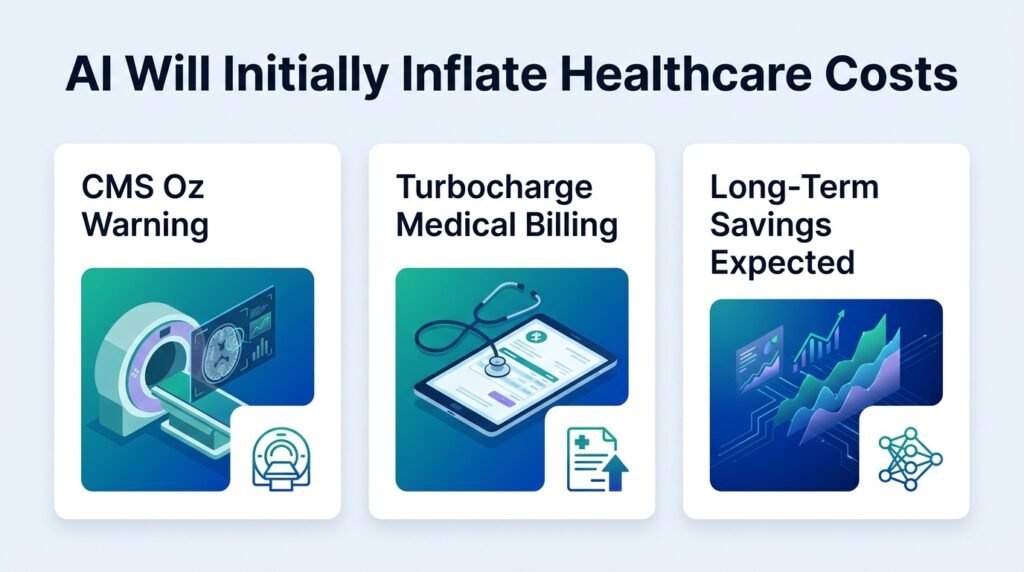
The promise of artificial intelligence in medicine comes with a hidden tax: a short-term surge in healthcare spending driven by hyper-efficient billing.
We are told automation brings efficiency, and efficiency cuts costs. In healthcare, that logic is backward. In a system built on fee-for-service complexity, making administrative tasks easier simply means making billing faster.
The Billing Surge
When clinical capacity increases and documentation becomes automated, the immediate result is not savings. It is a flood of optimized, highly accurate claims. AI is poised to turbocharge medical billing before it ever streamlines patient care. This administrative acceleration will likely drive up healthcare costs in the near term.
The federal government is already bracing for this financial bump. Regulators argue the short-term pain is necessary to achieve long-term savings through better decision support. But this transition period will be volatile for payers and patients alike.
The Denial Risk
The friction is already visible in federal initiatives. While programs like the ten-year ACCESS Model try to tie payments to patient outcomes, other algorithms are drawing heavy scrutiny. Critics warn that tools like the WISeR model, used to automate prior authorizations, could lead to inappropriate care denials and delays for Medicare beneficiaries.
This exposes the real tension. If AI is used primarily to maximize billing on one side and automate denials on the other, patients will bear the cost of an algorithmic arms race. The technology may eventually lower costs, but the road there is paved with higher premiums.