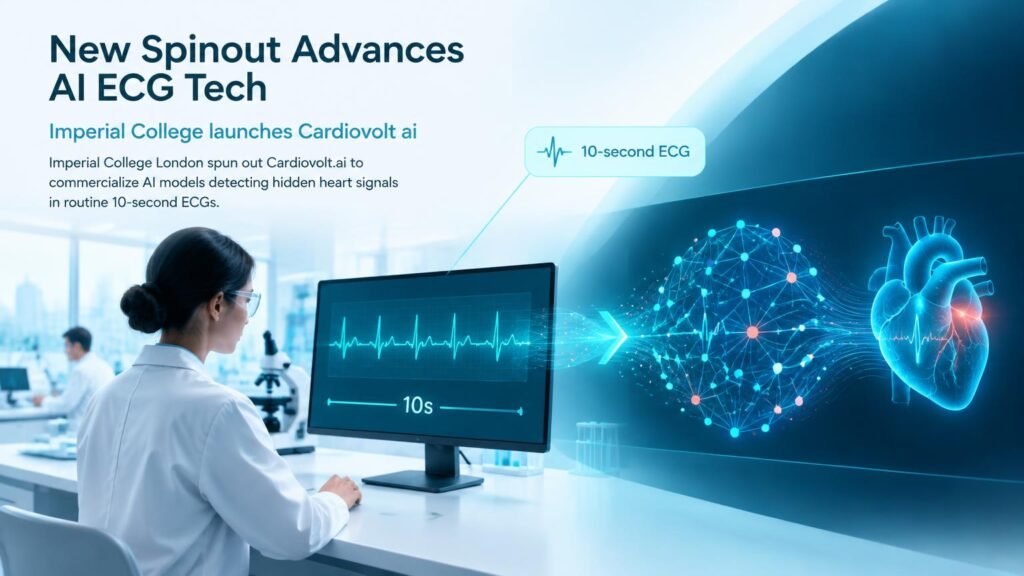
Routine ten-second heart traces can now spot hidden conditions like heart failure and diabetes before symptoms appear.
The Signal in the Trace
A standard electro-cardiogram measures cardiac electrical activity, but hidden digital patterns often go unnoticed by human eyes. Imperial College London spinout Cardiovolt.ai is commercializing AI models trained on over six million global ECGs to decode these invisible biomarkers. The software flags complex diseases like valve dysfunction, heart failure, and even non-cardiac conditions such as kidney disease directly from standard 10-second readings.
Accuracy versus Outcomes
The underlying framework achieves 83% to 93% accuracy in detecting early disease signals. Detecting a pattern, however, is not the same as improving long-term health. High diagnostic precision in retrospective data does not automatically mean better patient outcomes in live clinical workflows.
The company is preparing submissions for FDA 510(k) and EU MDR regulatory approvals to move the software into routine care. Until prospective trials prove these early alerts lower mortality or prevent hospital admissions, health systems must view this tool as a risk-stratification aid rather than a replacement for comprehensive diagnostic workups.