A massive capital injection for plant-based AI drug discovery shifts the industry’s focus from algorithmic promise to hard clinical trial outcomes.
AI drug discovery platforms have spent years selling a vision of faster, cheaper pipelines. Now, the pressure is on to prove these molecules actually work in human bodies.
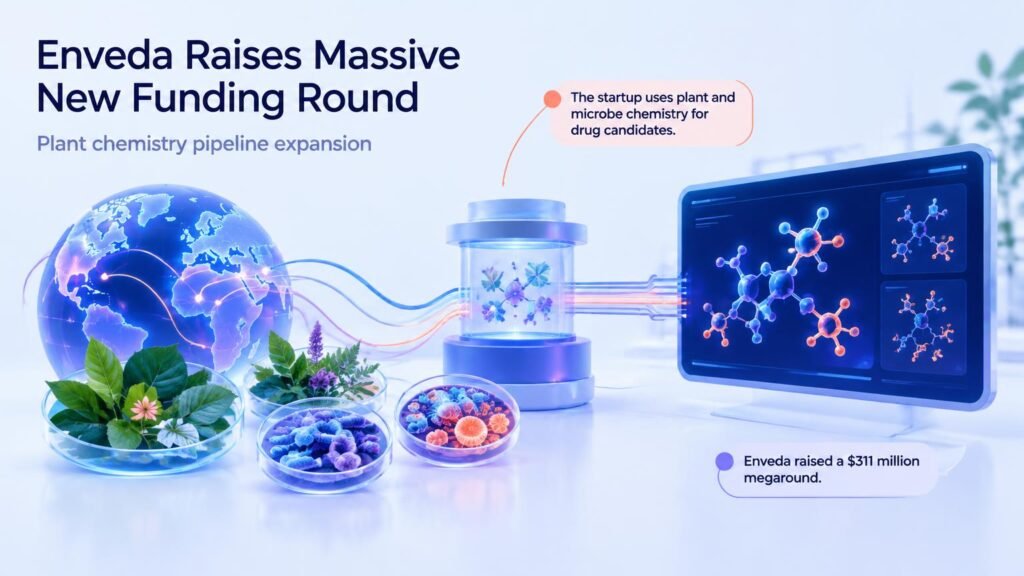
A $311 million funding round has doubled one platform’s valuation to $2 billion. The capital is earmarked for three clinical-stage candidates, including an eczema treatment and a compound for post-GLP-1 weight maintenance. This represents a critical pivot point for AI-driven drug development.
The Shift to the Clinic
The era of raising massive capital on theoretical platform capabilities is closing. Investors now demand mature, clinical-stage pipelines. By staying private longer, biotech startups are attempting to build and de-risk their assets away from the volatility of public markets.
But finding candidate molecules through plant chemistry is only the first step. The real bottleneck in drug development is not discovery. It is the high failure rate of human clinical trials.
The Efficacy Hurdle
An AI platform can map molecular structures faster than human researchers, but it cannot bypass human biology. The platform’s output is still subject to the same rigorous clinical trial phases where most drug candidates fail.
For clinicians and patients, the metric of success is not how many molecules enter trials, but how many survive them. The true test of this technology lies in the upcoming clinical data, not the valuation.