
A landmark regulatory nod for multi-cancer blood tests exposes a deep rift between detecting tumor DNA and actually saving patient lives.
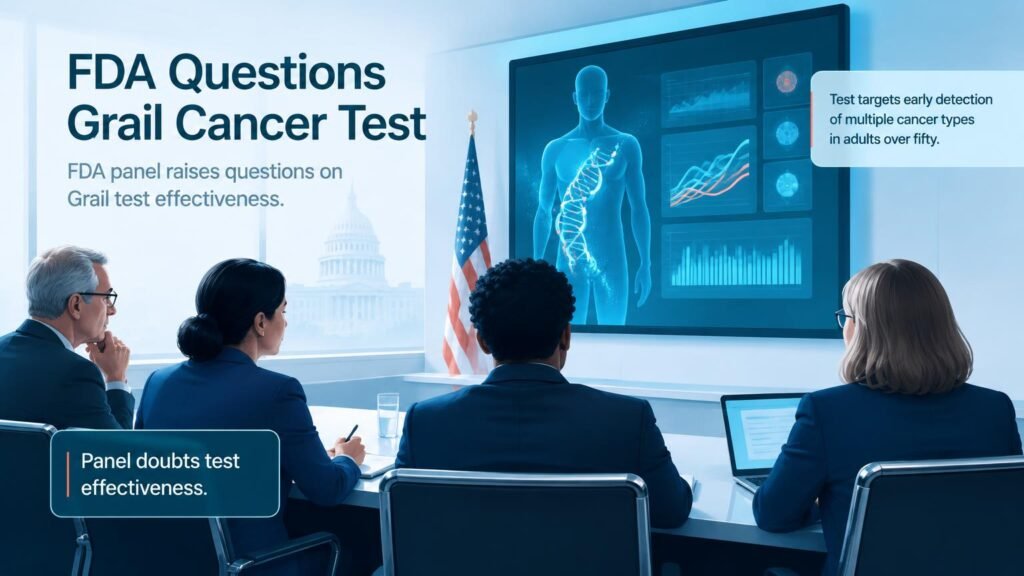
The FDA’s advisory committee voted 7–2 to recommend approving Grail’s Galleri test for adults over 50. This marks the first federal endorsement of a multi-cancer early detection blood test. Yet, the panel’s narrow 6–4 split on the test’s effectiveness reveals a critical clinical tension that health systems cannot ignore.
The Survival Gap
Detecting cancer signals in the bloodstream is not the same as curing patients. Recent large-scale clinical trial data from the UK showed that Galleri failed to significantly reduce late-stage cancer diagnoses or overall mortality rates. This distinction is vital for clinical adoption.
A diagnostic tool can be highly sensitive at finding circulating tumor DNA. However, if that early detection does not translate into better patient survival, its real-world utility remains unproven. It risks triggering unnecessary, invasive follow-up biopsies for slow-growing cancers that may never have caused harm.
Complement, Don’t Replace
Medical experts strongly cautioned that this blood test must only complement standard screenings. It cannot replace mammograms, colonoscopies, or lung scans. If patients view a negative blood test as a license to skip routine imaging, delayed diagnoses will inevitably rise.
For healthcare providers, the immediate takeaway is operational. Systems adopting these tests must build strict clinical guardrails. Without clear patient education, the promise of early detection could easily result in missed standard care and increased clinical anxiety.