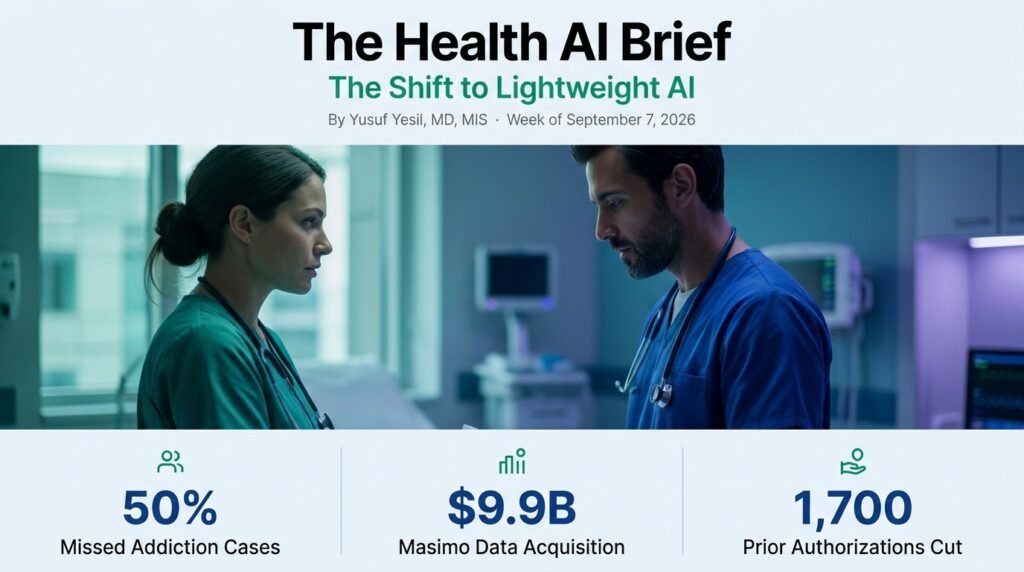
We are moving past the era of bloated, all-in-one software suites. This week’s developments show a clear shift toward highly specialized, lightweight AI systems that solve specific clinical bottlenecks without adding to our cognitive load.
🔹 Suki Launches Standalone AI Dictation for EHRs — IT departments are rejecting bloated software suites in favor of modular, standalone voice-to-text tools.
When I was building Yesil Health, I realized how much clinicians despise clunky integrations. For builders, the lesson is clear: sell the specific utility, not the entire ecosystem.
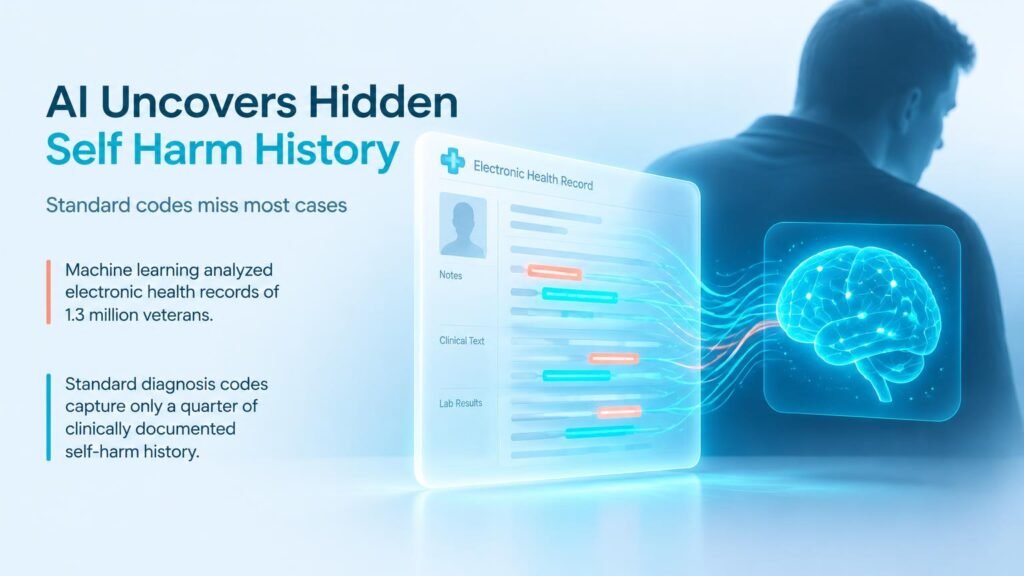
🔹 Hospital coding misses half of addiction cases — Standard hospital coding misses over 50% of emergency cases involving substances, but a local AI model can find them.
If you are seeing patients next week, you know how unreliable billing codes are for tracking actual clinical trends. Localized, simple models are proving far more useful than generalized, top-down hospital software.
🔹 Danaher Buys Masimo to Rule Patient Data — A massive $9.9 billion acquisition signals a shift from point-in-time lab diagnostics to continuous, real-time patient monitoring.
This is a massive play for the underlying data pipeline. For builders in this space, the value is no longer in the hardware itself, but in who controls the continuous stream of patient telemetry.
🔹 UnitedHealthcare Cuts 1,700 Prior Authorization Codes — Insurers are finally trimming the administrative red tape that delays patient care, though expensive treatments remain restricted.
While cutting 1,700 codes is a step forward, the real friction remains. Clinicians will still spend hours fighting for advanced therapies, but this opening allows automated tools to streamline what is left.
🔹 AI scribes shift malpractice risk to doctors — As hospitals rush to adopt ambient AI scribes, clinicians are quietly signing off on a massive liability shift.
If you are using an AI scribe in clinic, remember that you are the one signing the note. When the AI hallucinates a negative physical exam finding and you sign off, the legal liability rests entirely on your shoulders.