
Hospital wards are tangled in cords, but cutting the wires requires passing the world’s toughest medical device standards.
The push to untether patients from bedside monitors has long faced a silent barrier: regulatory friction. While consumer wearables iterate weekly, clinical-grade wireless sensors must prove they are as reliable as copper wires.
The Interoperability Pivot
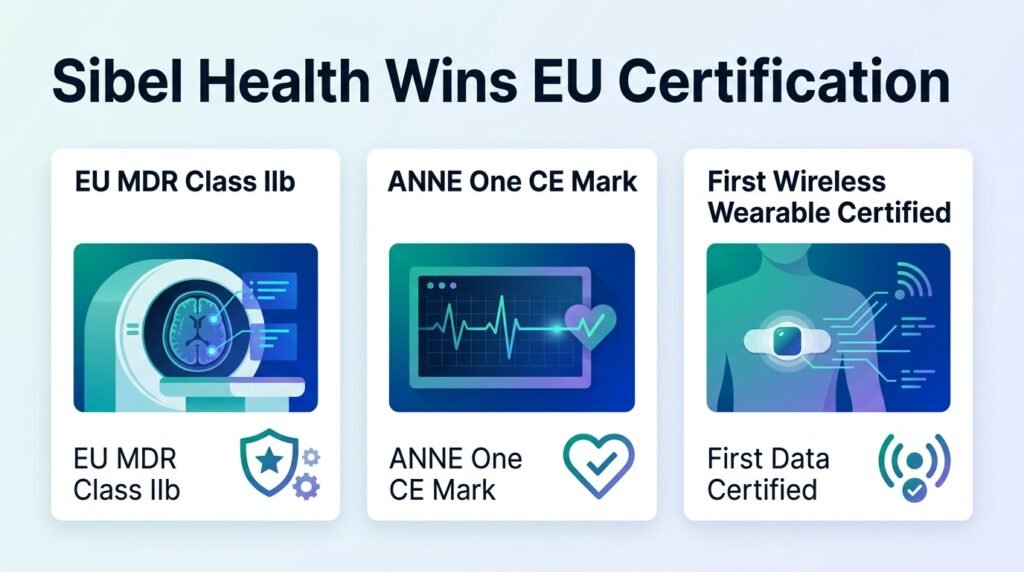
Sibel Health recently secured the EU MDR Class IIb CE Mark for its ANNE One platform. This makes it the first wireless monitoring system certified under Europe’s strict interoperability standards.
It is a quiet milestone with loud implications.
Regulators are no longer just asking if a wearable can track a heart rate. They are asking if it can seamlessly feed that data into existing hospital networks without dropping a beat.
This certification follows a March 2025 FDA clearance and a $30 million funding round led by Steele Foundation for Hope and Dräger. The capital is there, but the operational hurdles remain high.
The Workflow Reality
Replacing traditional wired systems is not just about patient comfort. It is about nursing survival.
Nurses spend hours silencing false alarms and managing cables. Wireless, interoperable sensors can streamline these workflows and enable earlier clinical interventions.
However, deployment is not a guaranteed victory.
Hospitals in Denmark, India, and Rwanda are already testing these systems. But scaling them globally requires more than regulatory stamps. It demands robust hospital Wi-Fi networks and staff trained to trust algorithm-driven alerts over physical tethers.
If wireless monitoring fails to integrate with electronic health records, it simply becomes another screen for exhausted clinicians to watch.