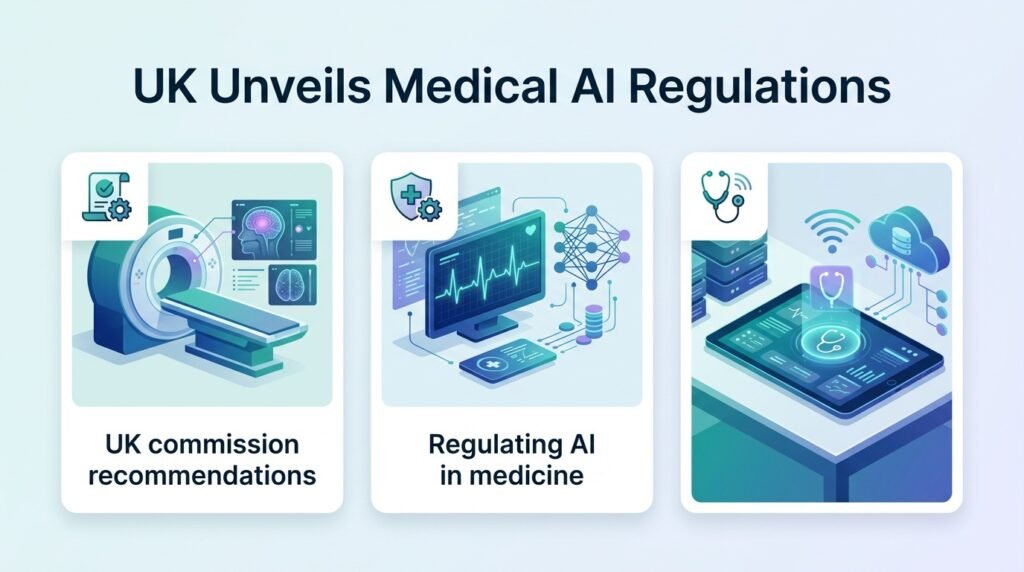
Regulators are finally admitting that medical artificial intelligence is never truly finished.
How do you certify a medical device that changes every time it encounters a new patient? Traditional healthcare regulation relies on a static stamp of approval. But clinical AI adapts, drifts, and behaves differently depending on the hospital IT system it plugs into.
The Learner License
A new blueprint from a UK commission suggests a radical shift. Instead of a one-time pass, AI models would receive provisional “L-plates” to prove their safety in real-world clinical settings under strict guardrails.
This staged authorization tackles a massive blind spot in digital health. Algorithms degrade. A diagnostic tool that works perfectly in a well-funded academic medical center can fail catastrophically in a rural clinic.
By requiring continuous, lifelong monitoring, the proposed framework treats AI more like a junior doctor under supervision than a finished piece of surgical hardware. It acknowledges that pre-market testing is no longer enough to guarantee patient safety.
The Implementation Trap
But this shift quietly moves the regulatory burden from software developers to the front lines. Under a continuous monitoring mandate, hospitals must become active surveillance hubs.
This is where the strategy risks stalling. The NHS is already struggling with legacy IT infrastructure and staffing shortages. Expecting busy clinical teams to monitor algorithms for subtle performance drops is unrealistic without dedicated funding.
If health systems lack the technical capacity to enforce these guardrails, provisional licensing will simply create a massive bottleneck. We risk locking useful tools in regulatory limbo.