A federal push to deploy autonomous AI agents for heart patients highlights a desperate shortage of human specialists.
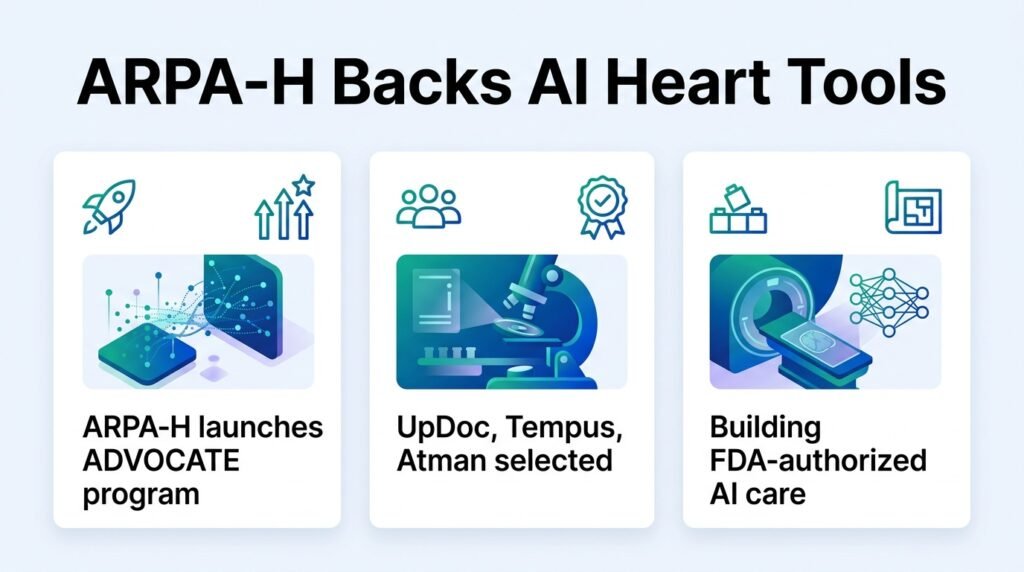
Nearly 46% of U.S. counties do not have a single practicing cardiologist. This stark deficit is the driving force behind a new $62.7 million federal initiative to deploy autonomous AI agents directly to patients.
Instead of just summarizing medical charts, these tools will actively manage heart disease. Startups like Tempus AI and UpDoc are leading the development of these FDA-authorized agentic tools.
The Safety Dilemma
Giving AI agents the authority to interact with heart patients is a massive regulatory and clinical leap. To mitigate the risk of bad medical advice, Stanford University is building a separate disease-agnostic supervisory AI to monitor the patient-facing tools.
This two-tier architecture proves that developers do not yet trust agentic AI to run unsupervised. This is a fundamental shift in liability. By funding an independent overseer AI, regulators are acknowledging that generative models are too unpredictable to be left alone with high-risk patients.
The Financial Bet
The financial stakes are massive. If successful, the program is projected to save up to $28 billion annually in healthcare costs. UpDoc is partnering with Microsoft, OpenAI, and NVIDIA to scale its platform, while Kaiser Permanente and Duke University will test the tools in real-world clinics.
But the true test will not be the technology itself. It will be whether patients trust an algorithm to manage their failing hearts when a human doctor is miles away.