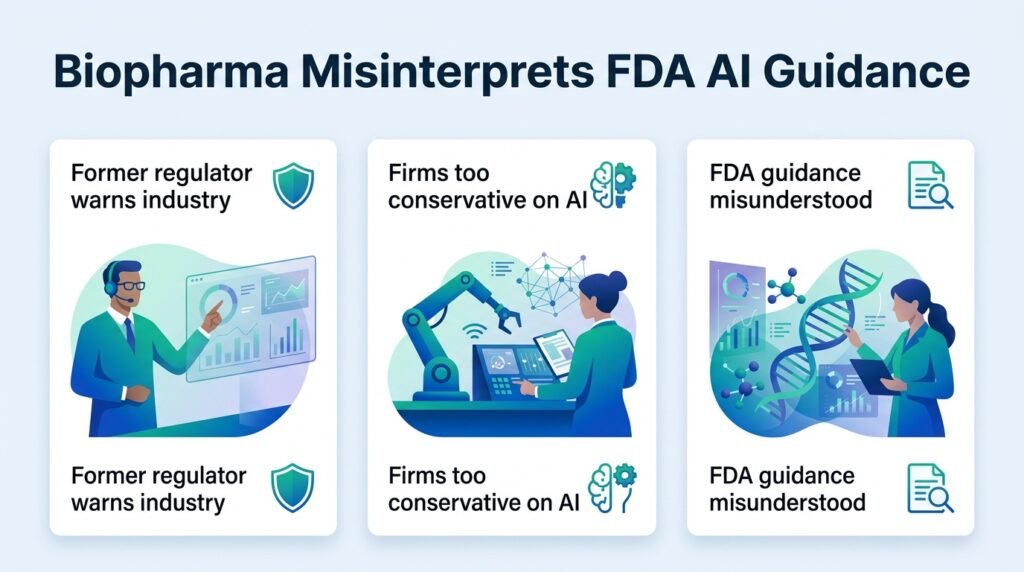
Biopharma companies are stalling their own AI progress by misreading regulatory signals.
Are drug developers their own worst enemies when it comes to adopting artificial intelligence? While industry leaders complain about regulatory uncertainty, the real bottleneck might be self-inflicted. Drug companies are interpreting early regulatory guidance with extreme, unnecessary caution. This defensive posture slows down drug development pipelines before regulators even have a chance to review them.
The fear of moving first
By treating draft guidelines as rigid boundaries, companies are self-censoring their AI applications. They fear that aggressive AI integration in clinical trials or drug discovery will trigger automatic rejections. But regulators actually want to see how these tools perform in the real world.
This conservative approach is particularly damaging because the regulatory landscape is currently frozen. High-profile departures at the top of the Food and Drug Administration, including the commissioner and the chief AI officer, have left leadership gaps.
A slow regulatory machine
These vacancies mean the agency will likely take longer to issue finalized, transparent frameworks. Internal AI adoption within the government is also slowing down. If industry players do not push the envelope now, the entire field risks stagnation.
Waiting for perfect clarity from a depleted agency is a losing strategy. Drugmakers must stop waiting for a green light that may not arrive for years. The companies that learn to manage risk, rather than avoid it entirely, will define the next decade of medicine.