Hospitals are buying AI tools on promises, but validating them in the real world remains a dangerous blind spot.
Algorithms are flooding clinics to read scans and draft patient notes. Yet, very few undergo rigorous, independent testing once they enter the chaotic environment of an active hospital.
This disconnect is where marketing meets operational reality.
The Validation Gap
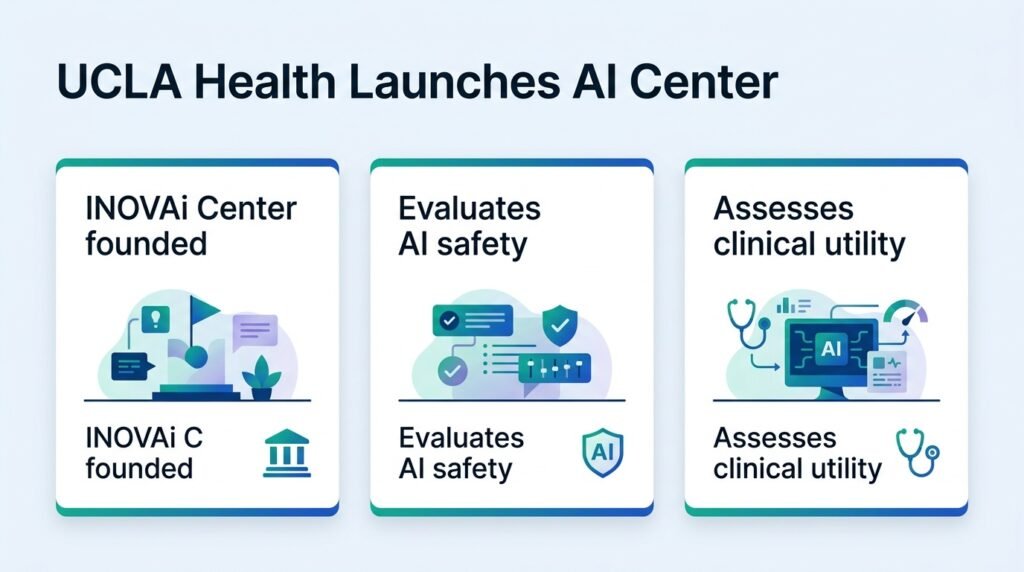
UCLA Health is launching the INOVAi Center to address this exact vulnerability. Instead of accepting vendor claims, the initiative will evaluate AI tools across their entire lifecycle.
It is a shift from passive adoption to active policing.
Early testing by the center’s leadership on AI medical scribes showed measurable drops in physician exhaustion and cognitive load. But scribes are low-risk. The real challenge lies in high-stakes diagnostic tools where algorithmic drift or hidden bias can quietly compromise patient safety.
The Local Trap
The center aims to build a framework to guide integration nationwide. This is a noble goal, but it faces a steep hurdle: clinical workflows are highly localized.
An AI tool that excels in a wealthy academic medical center often fails when deployed in a resource-constrained community clinic.
To succeed, validation cannot just happen in a lab. It must account for the messy, unpredictable ways humans interact with machines under pressure. Without standardized, real-world stress testing, hospitals are simply beta-testing software on patients.