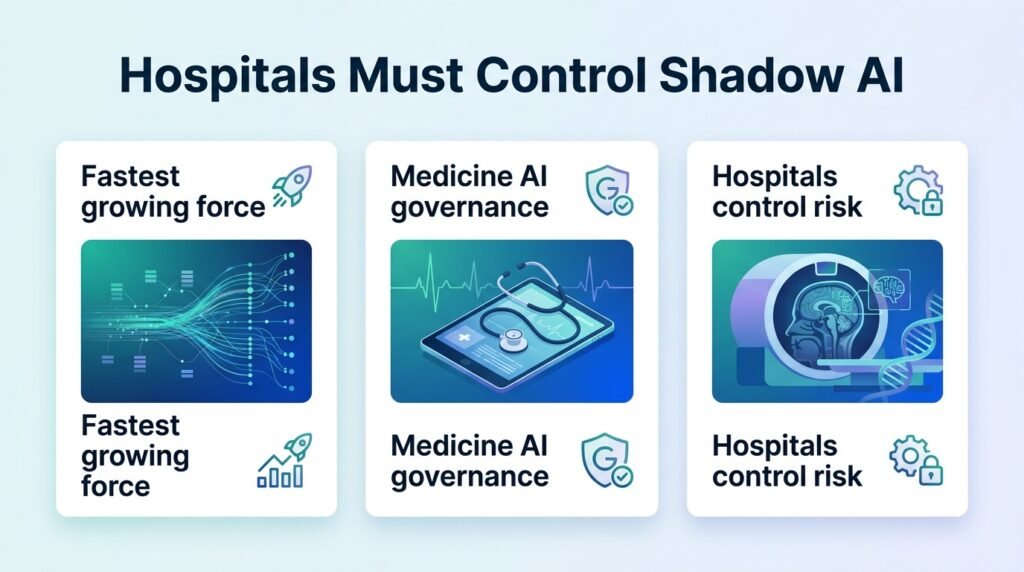
Clinicians are quietly adopting consumer AI tools to escape administrative burnout, forcing hospitals to choose between strict enforcement and realistic governance.
Doctors and nurses are not waiting for IT department approval. Faced with crushing administrative workloads, healthcare workers are taking matters into their own hands.
Recent data reveals that over 60% of healthcare workers have encountered or used unauthorized AI tools at work. Nearly 20% admit to personal use of these unapproved systems.
This is shadow AI, and it is spreading faster than official procurement channels can react.
The Compliance Trap
Banning these tools does not work. When hospitals issue blanket bans, clinicians simply hide their usage. This creates a massive blind spot for patient privacy.
The core issue is not a lack of ethics, but a survival mechanism. Clinicians spend hours on documentation instead of patient care. Unauthorized AI offers immediate relief.
However, consumer-grade AI models routinely feed user prompts back into their training loops. When medical staff input patient notes, they risk severe HIPAA violations and data breaches. These tools also lack clinical validation, introducing quiet errors into patient records.
The Governance Shift
Hospitals must pivot from prohibition to curation.
The solution is not more red tape. Forward-thinking health systems are deploying secure, compliant alternatives that mimic the ease of consumer tools.
But building these secure pipelines takes time and capital. Many smaller clinics cannot afford custom enterprise AI contracts. This creates a dangerous divide where only wealthy health systems can guarantee data safety.
Ultimately, shadow AI is a symptom of a broken workflow. Until official hospital technology matches the speed of consumer apps, the security risks will remain.