
Advanced stem cell therapies for jaw bone defects offer no relief advantage over standard surgery, but machine learning can accurately forecast patient recovery.
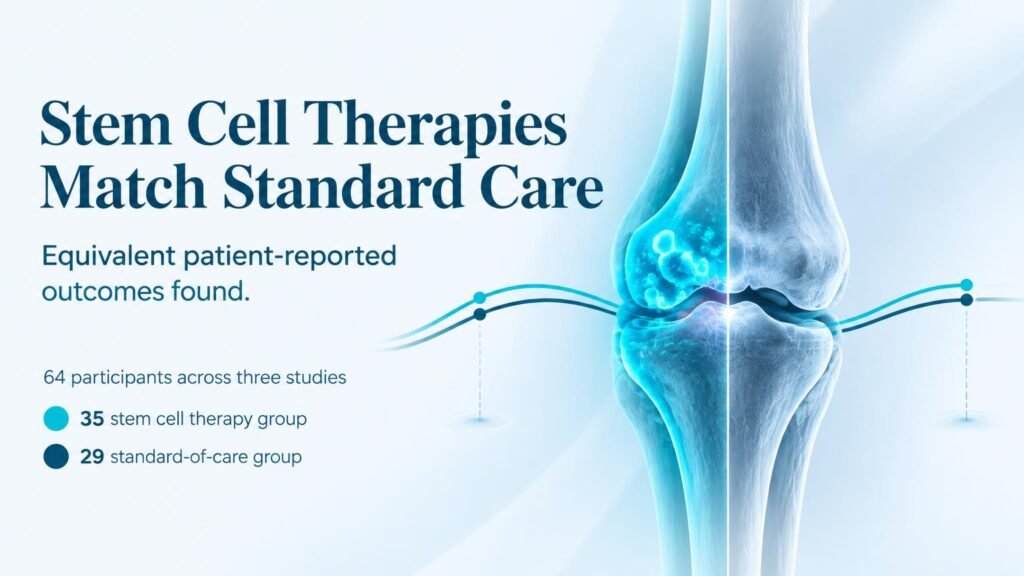
Regenerative stem cell treatments promise to rebuild damaged facial bone without invasive bone harvesting. A secondary analysis of three randomized controlled trials reveals these biological approaches leave patients in just as much discomfort as traditional surgical techniques.
That equivalence is a crucial reality check for biological innovation.
Researchers tracked 64 participants undergoing reconstruction for tooth extraction sockets, maxillary sinus floor augmentation, trauma, or alveolar clefts. The analysis compared 35 patients receiving posterior iliac crest bone marrow aspirate on a scaffold against 29 patients treated with standard guided bone regeneration or autogenous bone grafts. Clinicians evaluated early wound healing indices alongside self-assessed discomfort, adverse events, and quality of life at 1, 2, and 4 weeks post-surgery.
Comparing Patient Recovery Trajectories
Across both treatment groups, patient-reported discomfort increased significantly over time (p < 0.001). Quality of life scores worsened with patient age (p = 0.02), while Hispanic ethnicity recorded the highest overall quality of life scores (p = 0.01). Adverse events rose sharply with age and among female patients (p < 0.001). Crucially, experimental stem cell therapy showed no statistically significant difference in recovery burden compared to standard bone grafting.
This finding aligns with previous clinical observations of autologous human bone marrow stem cell grafts, which demonstrate structural potential but similar post-operative demands on patients.
Predicting Post-Surgical Healing
To make sense of recovery variations, researchers applied machine learning algorithms to the trial datasets. The modeling demonstrated strong capability in forecasting patient outcomes across distinct surgical indications:
- Nonlinear machine learning models accurately predicted early wound healing index, quality of life, and discomfort levels.
- All tested algorithmic models successfully predicted the occurrence of binary adverse events.
- Models trained on extraction socket and trauma data successfully transferred to predict outcomes in sinus augmentation cohorts.
The primary limitation of this study lies in its modest sample size of 64 patients drawn from secondary trial data. Predictive models trained on small cohorts require prospective validation in larger clinical populations before doctors can rely on them for routine surgical planning.
For clinical teams, the takeaway is pragmatic. Regenerative biologics do not spare patients from standard post-surgical morbidity. Instead of assuming high-tech therapies reduce recovery pain, care providers should deploy predictive tools to identify high-risk groups—such as older or female patients—who require targeted post-operative symptom management.
Read the full study in the Journal of Translational Medicine.