Yusuf Yesil, MD, MIS
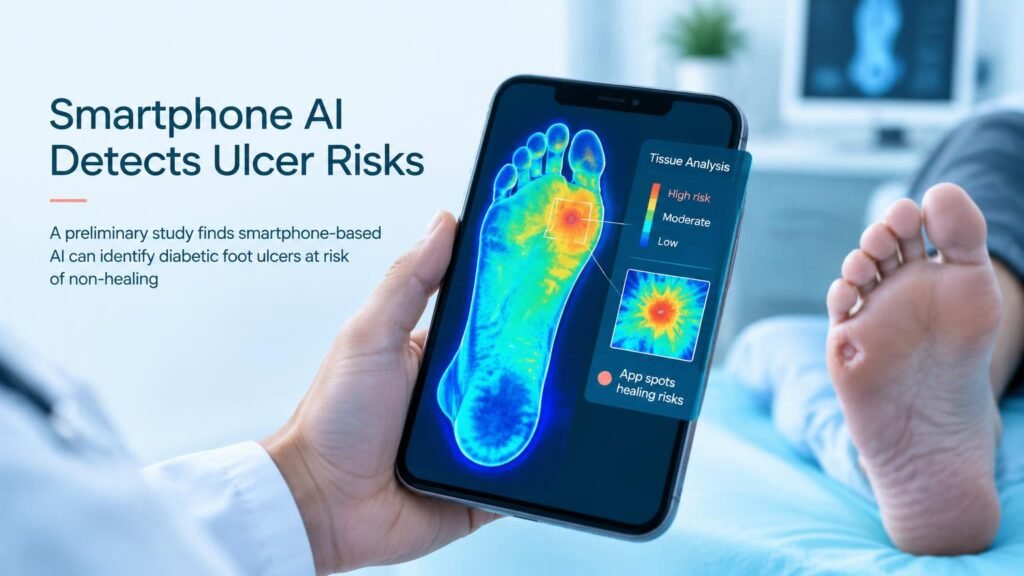
Standard care forces clinicians to wait four weeks just to evaluate whether a diabetic wound is responding to treatment. By then, hidden tissue degradation often sets in, driving up the risk of severe infection and lower-limb amputation.
Early Thermal Risk Profiling
New research demonstrates that combining smartphone-attached thermal cameras with machine learning algorithms allows providers to detect thermal and tissue patterns invisible to the naked eye. Tested by Australian researchers at RMIT University and the University of Melbourne, the THERMUL tool predicts 12-week healing trajectories from a patient’s very first appointment.
This shifts wound care from reactive monitoring to immediate risk stratification.
Operational Reality Check
For the more than 500 million people living with diabetes globally, early escalation is critical. The practical impact is sharpest in rural and remote settings, where access to specialized podiatric care is scarce. Identifying non-healing ulcers on day one allows general practitioners to triage high-risk patients immediately.
However, early predictive accuracy does not automatically translate to saved limbs. The current data remains preliminary. Until prospective trials prove that algorithm-guided care pathways directly reduce amputation rates compared to standard protocols, this technology remains a promising triage assistant rather than a replacement for expert clinical judgment.