

Expanding virtual care platforms does nothing for patients who lack the basic digital infrastructure to log on.
The promise of digital medicine assumes an internet connection that actually exists. While urban centers quickly integrated virtual visits into routine chronic care, rural communities are being left behind. This is not a matter of patient preference. It is a structural bottleneck that challenges the industry’s entire remote-care strategy.
The Digital Threshold
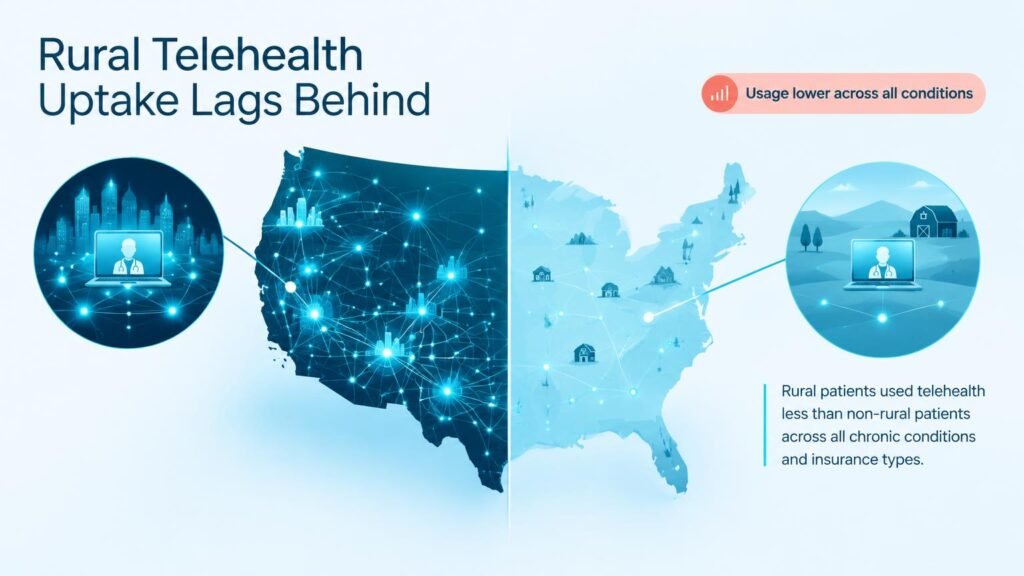
Rural patients use telehealth less than urban peers across every single chronic condition and insurance type. The barrier is infrastructure, not interest. Research indicates a region needs at least a 40% to 50% broadband penetration threshold before virtual care can successfully improve local clinical outcomes.
Without this baseline, digital health tools cannot scale.
This gap creates a dangerous paradox. The very populations with the highest chronic disease burden are the least able to access remote monitoring and virtual consultations. Forcing virtual-first insurance plans or clinical models onto these regions without addressing the digital divide simply worsens existing health disparities.
The Infrastructure Trap
The limitation of current digital health strategy is the belief that software solves access. It does not. Clinicians cannot rely on video visits if patients lack devices or digital literacy. Additionally, providers face operational hurdles like complex state licensing laws and reimbursement uncertainties that make rural virtual clinics financially risky.
The takeaway is clear. Health systems must stop treating telehealth as a universal plug-and-play solution. Until broadband investments catch up to software capabilities, rural chronic disease management will still require physical, localized intervention.