
As clinicians adopt artificial intelligence to draft medical notes, patients are quietly deploying their own AI scribes to police the conversation.
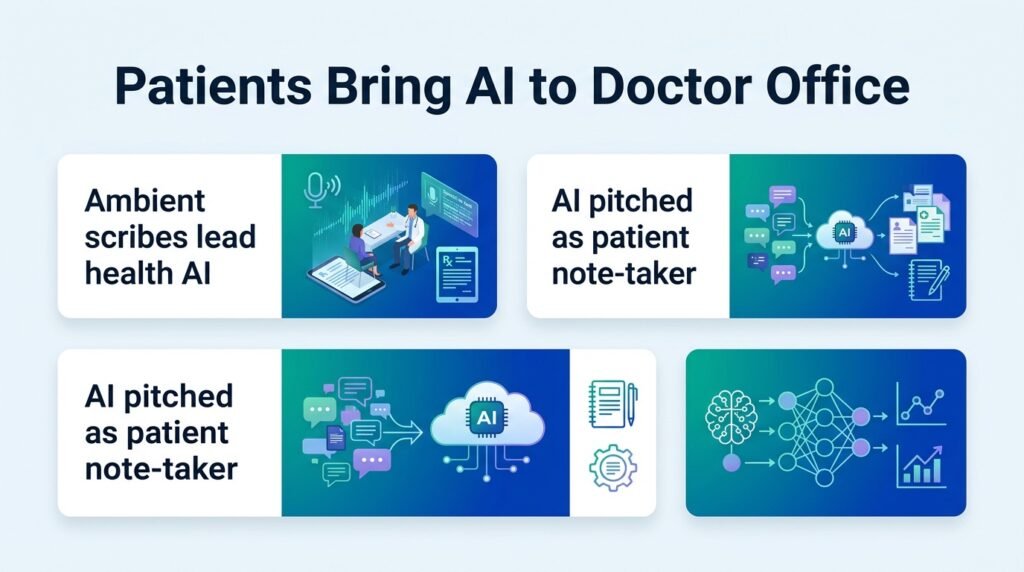
For years, the power dynamic of medical documentation favored the clinic. Doctors wrote the charts, and patients struggled to decode the jargon. Now, consumer-facing apps like VisitRecall, Advoca, and Medcorder are shifting that balance. Patients are using mobile AI to record, transcribe, and summarize their own appointments.
Over a quarter of U.S. medical practices already use ambient AI scribes to ease clinician burnout. It was only a matter of time before patients demanded the same clarity.
The Trust Deficit
This is not just about memory retention. It is a symptom of a systemic trust deficit in healthcare. Patients often leave appointments forgetting half of what was said. Having an independent, AI-generated record provides a safety net.
But this shift introduces a legal minefield. In many states, recording a conversation requires explicit consent from both parties. Doctors, already wary of malpractice risks, may not welcome a digital witness capturing every off-hand remark.
Privacy and Power
There are also massive data risks. When patients upload clinical audio to third-party apps, they bypass standard hospital privacy protections. Tech giants like OpenAI are launching consumer health experiences, raising questions about where this highly sensitive diagnostic data eventually lands.
Ultimately, patient-led AI scribing is a logical response to a rushed healthcare system. If clinics cannot provide clear, accessible communication, patients will use technology to generate it themselves. The challenge now is managing the legal and privacy fallout of a dual-recorded exam room.