
Interactive 3D overlays and conversational AI are shifting procedural training from static manikins to adaptive real-time feedback.
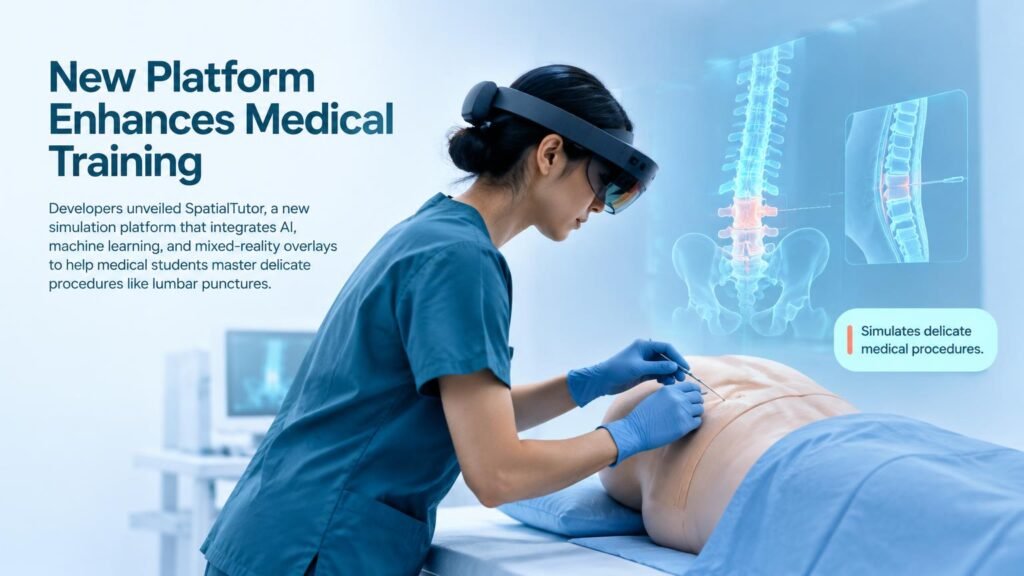
Medical trainees practicing invasive procedures like lumbar punctures traditionally rely on plastic manikins and periodic instructor feedback. This setup often misses subtle positioning errors until a real patient is on the table. A new simulation platform developed at Carle Illinois College of Medicine pairs physical training models with mixed-reality 3D tracking and a conversational language model.
Beyond Static Manikins
The platform, named SpatialTutor, superimposes digital anatomical guidance onto physical manikins while an AI assistant answers questions and evaluates steps during a procedure. Initial testing with expert physicians and novice students demonstrated high usability scores and strong user engagement. By combining physical touch with dynamic spatial software, the system provides immediate, granular guidance that static models cannot match.
This shift addresses a persistent operational bottleneck in clinical education: instructor availability. Teaching faculty cannot monitor every student continuously in high-throughput simulation labs. Automated real-time tracking offers a standard baseline of feedback before students enter real clinical environments.
The Outcome Gap
Usability studies are not clinical validation. High engagement scores in a controlled lab setting do not guarantee that trainees will commit fewer procedural errors or reduce patient complication rates in live hospital wards. Early-stage testing proves the interface works, but it does not confirm downstream clinical competence.
Healthcare institutions looking to adopt spatial AI tools must measure procedural speed and error rates against traditional methods before replacing human oversight. Bridging physical simulation with digital tracking improves access to feedback, but patient outcomes—not trainee satisfaction—remain the ultimate metric of success.