
Multi-agent orchestration pushes complex diagnostic accuracy higher, but foundational models still do the heavy lifting.
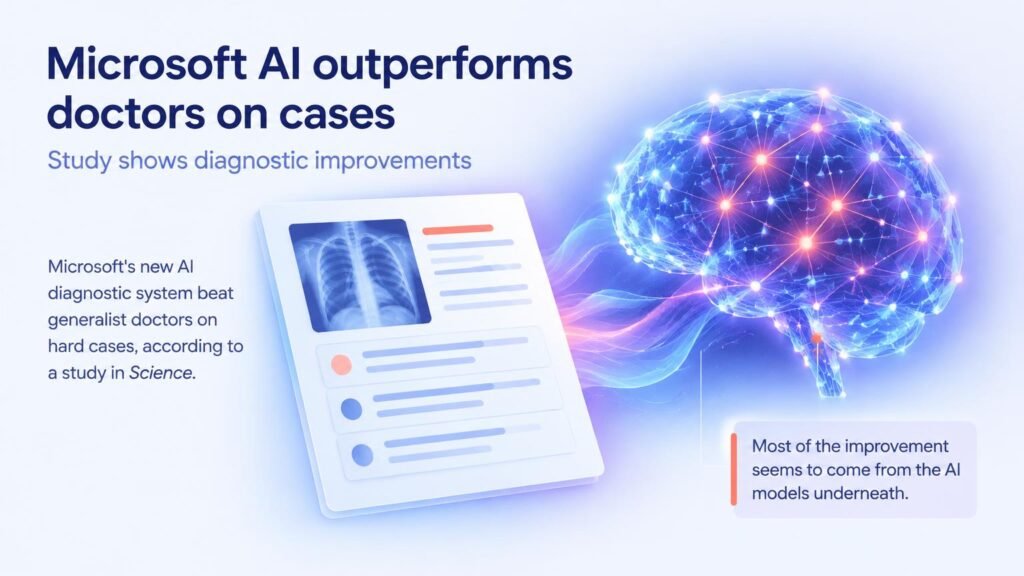
Automated clinical reasoning just took a measurable step forward on paper. In standardized testing using complex case studies, a multi-agent system reached 83% diagnostic accuracy, far outperforming practicing generalist physicians who scored between 22% and 36%.
The result highlights a growing gap between human generalists and specialized algorithms when evaluating rare or convoluted clinical presentations.
Orchestration Versus Underlying Power
The system coordinates multiple specialized AI personas to deliberate over patient files. However, analytical scrutiny reveals that performance gains stem largely from the raw capabilities of underlying frontier LLMs rather than the orchestration layer itself.
High accuracy on static board-style cases does not equal clinical safety. Simulated case files lack the noise, missing data, and unpredictable variables of real hospital workflows.
Real-World Validation Ahead
Diagnostic accuracy is not patient outcome. Retrospective benchmark performance cannot prove a tool is ready to replace human clinical judgment at the bedside.
To test actual clinical utility, real-world trials are deploying at Mayo Clinic and Beth Israel Deaconess Medical Center. Until prospective trial data arrives, these tools remain sophisticated lookup engines rather than autonomous diagnostic replacements.