
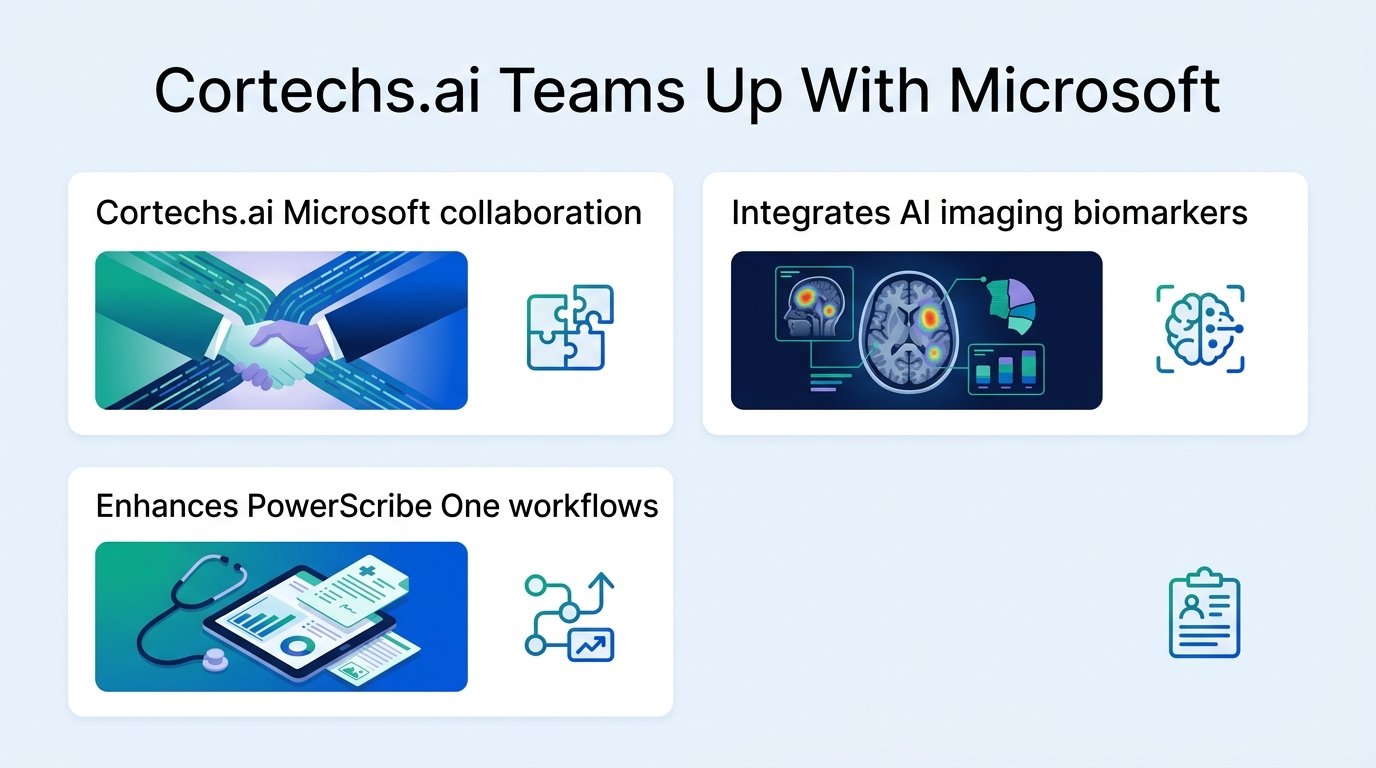
Radiologists do not need more AI models; they need the models they already have to stop wasting their time.
For years, the promise of quantitative imaging has been strangled by administrative friction. Clinicians using advanced brain and prostate AI tools have been forced to manually copy metrics from secondary screens. Alternatively, they had to attach clunky PDFs to patient records. It was a high-tech medical solution wrapped in a low-tech workflow that actively slowed down diagnostics.
The Integration Cure
A new collaboration between Microsoft and Cortechs.ai aims to eliminate this friction. By embedding FDA-cleared neuroimaging and prostate biomarkers directly into the widely used PowerScribe One reporting system, quantitative data now populates automatically as “AI Findings.”
This is not about creating new science. It is about plumbing. The industry is realizing that the most sophisticated algorithm is useless if it sits outside the daily routine.
The Workflow Battle
The real bottleneck in clinical AI is no longer accuracy. It is adoption. If an algorithm requires three extra clicks, overworked radiologists will ignore it. Routing these metrics through the Azure-hosted Precision Imaging Network keeps clinicians in a single interface.
Yet, this integration push highlights a growing industry tension. As specialized AI developers rush to partner with giants like Microsoft or clinical networks like Viz.ai, they risk becoming dependent on gatekeepers. Hospitals must watch whether these integrations truly reduce cognitive load or simply lock them into specific ecosystem silos. True efficiency requires open standards, not just exclusive partnerships.