
Post-stroke physical recovery does not have to end when patients leave the clinic.
For decades, medical consensus assumed chronic stroke patients reached a permanent recovery plateau after a few months. New clinical data dismantles that assumption.
Dismantling Recovery Plateaus
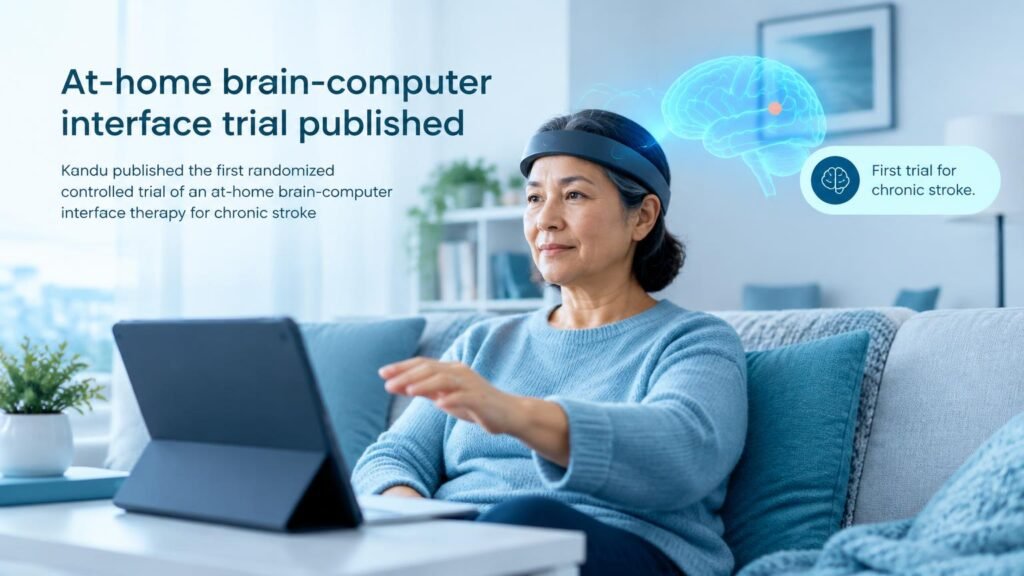
In a randomized controlled trial of an at-home non-invasive brain-computer interface, over 55% of chronic stroke patients achieved clinically meaningful motor gains. In contrast, under 10% of the control group showed similar improvement. The intervention paired an EEG headset with a robotic glove, allowing patients to drive hand movement using neural signals from the uninjured hemisphere of their brain.
This is the first randomized controlled trial evaluating home-based brain-computer interface therapy for chronic stroke survivors.
Operational Shift to Home Care
The core shift here is operational rather than purely technological. Moving intensive neurorehabilitation from specialized clinics into the home removes geographic and logistical barriers to long-term care.
However, successful adoption hinges on real-world compliance outside controlled trial settings. Diagnostic accuracy and initial trial gains do not automatically translate to universal long-term adherence without ongoing clinical oversight. Healthcare providers considering these tools must evaluate patient support systems to ensure home-based compliance matches trial conditions.