

Deep learning-based infrared thermography reveals reproducible uniform and individual thermoregulatory responses during running.
April 1, 2026Deep learning in infrared thermography shows consistent thermoregulatory responses during running. Key metrics reveal individual variations. 📊🏃♂️

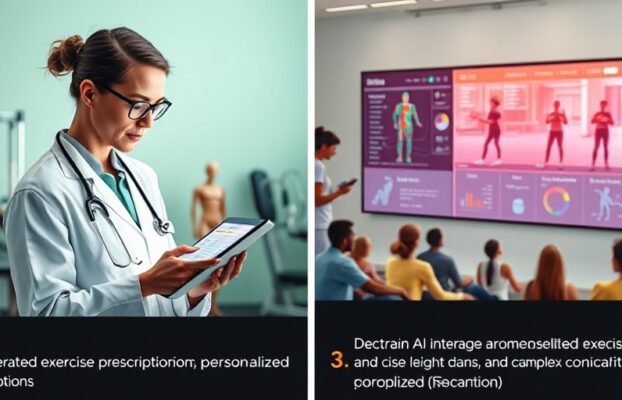
AI-Generated Exercise Prescriptions for At-Risk Populations: Safety and Feasibility of a Large Language Model Assessed by Expert Evaluation.
April 1, 2026AI-generated exercise prescriptions show potential but lack expert consensus. Safety scores improved with structured prompts. 📊🤖

Benchmark evaluation of large language models for clinical decision support in headache management.
March 31, 2026Evaluating LLMs in headache management: ChatGPT-4o excels in diagnostic accuracy, but overall performance remains below expert standards. 🧠📊

Digital Innovations Supporting Community Health Initiatives
March 31, 2026Digital tools enhance community health initiatives. Listen to Ben Hampshire and Dr. Rowan Sil discuss their impact. 🎧💡
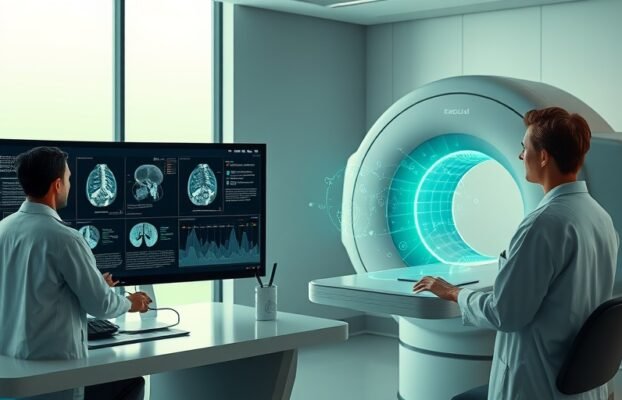
The Dawn of PACS 3.0: The Evolution from Image Access to Workflow Intelligence.
March 31, 2026PACS 3.0 integrates AI for enhanced workflow efficiency in radiology, improving care quality. 📈🩻
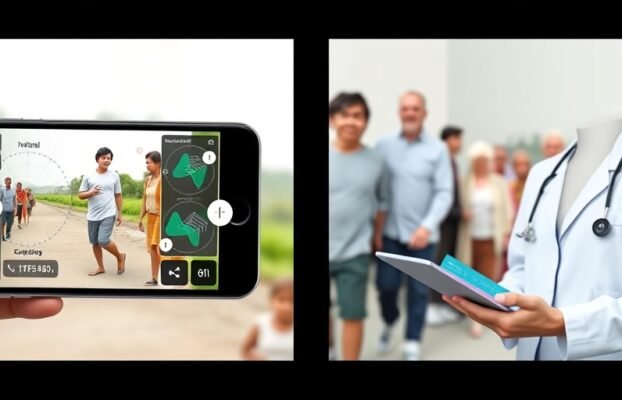
Video-Based Gait Assessment Using Machine Learning to Classify Age and Sex in Low-Resource Settings: Cross-Sectional Study.
March 31, 2026Smartphone gait analysis can classify age and sex with 93.5% accuracy, aiding health assessments in low-resource settings. 📱👣
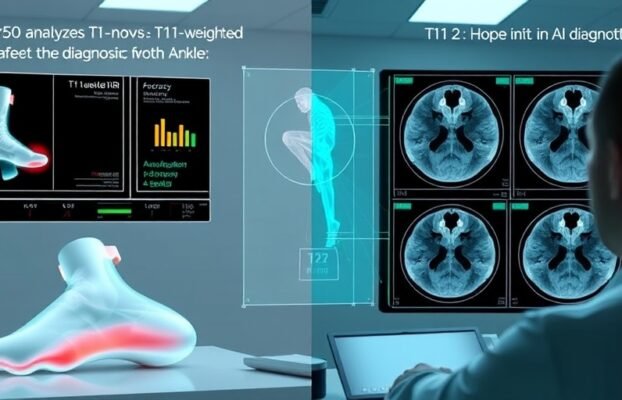
High diagnostic accuracy of a resnet50-based deep learning model for osteochondral lesions of the talus on magnetic resonance imaging.
March 30, 2026ResNet50 model achieves 94.1% accuracy for detecting talus lesions on MRI. T1 sequences outperform T2. 📊🦴
Cheshire NHS Trusts Enhance Shared EPR System Post-Launch
March 30, 2026Cheshire NHS Trusts improve shared EPR system for better patient care. Collaboration enhances efficiency and data management. 🏥📊

Leveraging artificial intelligence to personalize treatment for eating disorders: A proof-of-concept study.
March 30, 2026AI enhances personalized treatment for eating disorders, analyzing 35 participants' EMA data over 14 weeks. 📊🤖