Real-world testing proves conversational AI can safely gather patient histories under supervision, but human doctors still write better treatment plans.
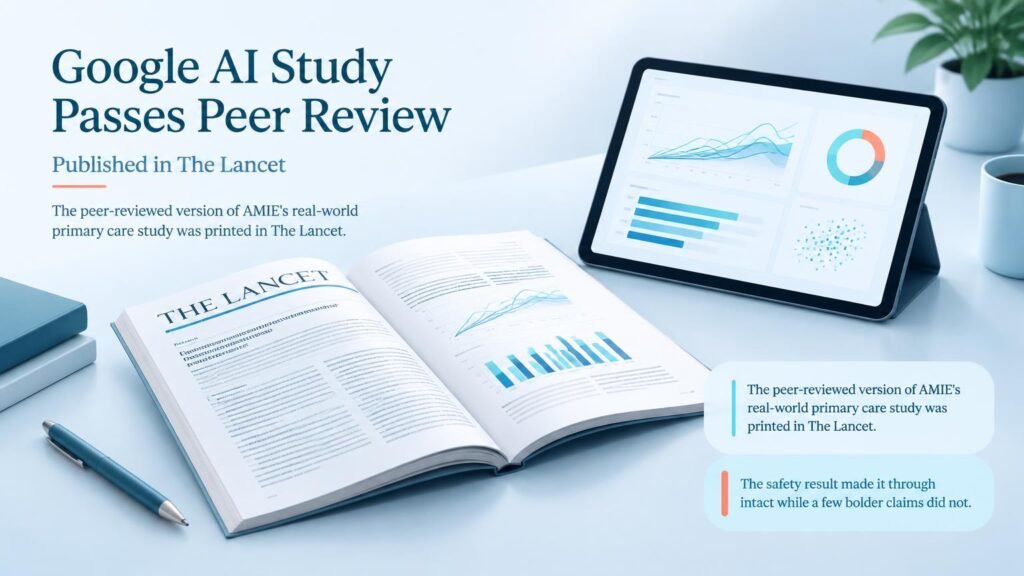
Peer-reviewed results from a trial of 98 primary care patients show that Google’s conversational AI, AMIE, operated without a single safety intervention from supervising physicians. The system included the ultimate diagnosis in its initial differential list 90% of the time during live intake history sessions.
The Peer Review Reality Check
While early claims touted broad superiority, rigorous academic scrutiny softened the narrative. Human physicians consistently outperformed the AI on cost effectiveness and practical treatment planning.
Supervising clinicians also reported minor hallucinations and frequent needed addendums. The model proved effective at structured questioning, but struggled with real-world logistical nuances and cost-conscious care.
What Changes For Care Teams
This study demonstrates safe prospective pre-visit history taking under strict physician oversight. It does not establish clinical equivalence or autonomous decision-making.
The practical takeaway is operational. Expect AI conversational tools to deploy as intake assistants that trim documentation burdens, not as independent diagnostic replacements.