
Self-reported ethnicity has long been a blunt instrument in clinical research, masking the precise genetic variations that drive disease risk.
For decades, medicine has relied on broad, self-reported racial categories to study health disparities. This approach is fundamentally flawed. It groups vast, diverse populations into monolithic blocks, obscuring the subtle genetic nuances that actually determine why one person gets sick and another does not. This crude categorization leaves millions of patients with treatments optimized for someone else.
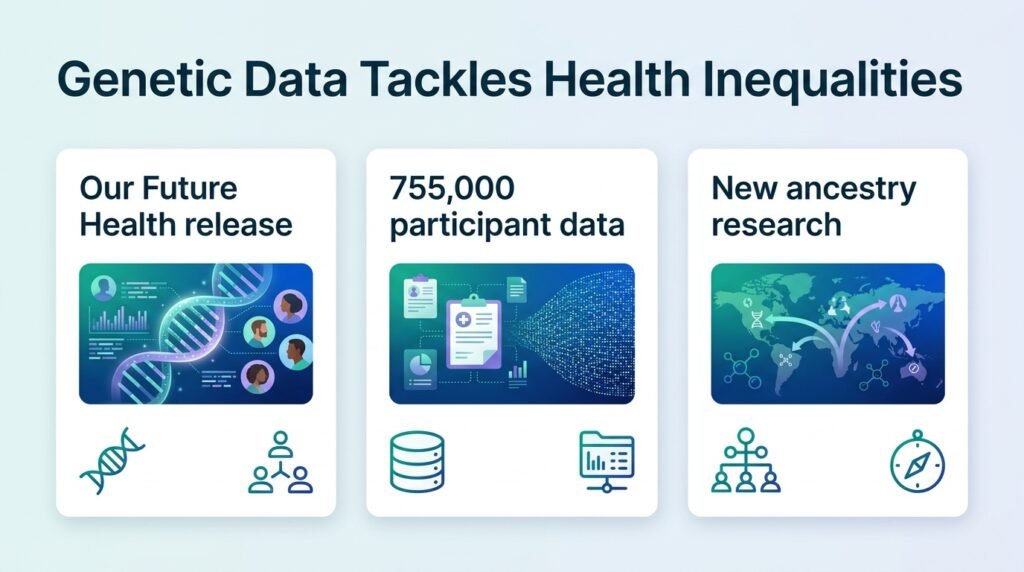
A massive shift is underway in how researchers map disease. By linking genetic data with precise ancestry for 755,000 participants, a major UK health program has created the largest resource of its kind. Using advanced imputation, researchers expanded the tracked genetic variants from 700,000 to 159 million.
Beyond self-reported race
Genetic ancestry is not the same as social identity. Where your ancestors lived geographically provides a much clearer picture of disease risk than a checkbox on a demographic form. It allows scientists to pinpoint rare genetic markers that are often lost in the noise of larger, homogeneous datasets. This precision is vital for studying rare, deadly conditions like pancreatic cancer, where broad categories fail to highlight specific genetic vulnerabilities.
However, data scale alone does not guarantee equity. The real test is whether clinical trials and drug developers actually use this diverse dataset to design treatments for historically overlooked populations, or if it simply remains an academic milestone.
The clinical hurdle
Translating 159 million variants into targeted therapies is a monumental computational and clinical challenge. If health systems cannot integrate this genomic precision into routine care, the gap between data-rich research and actual patient outcomes will only widen.