The federal government is finally moving to regulate generative AI in clinical settings, but the transition from static algorithms to unpredictable models will test the limits of traditional oversight.
The FDA has cleared over 1,000 AI-enabled medical devices, but almost all of them rely on locked, static algorithms. Generative AI is a different beast entirely. It is dynamic, unpredictable, and prone to hallucinations.
The Shift to Dynamic Risk
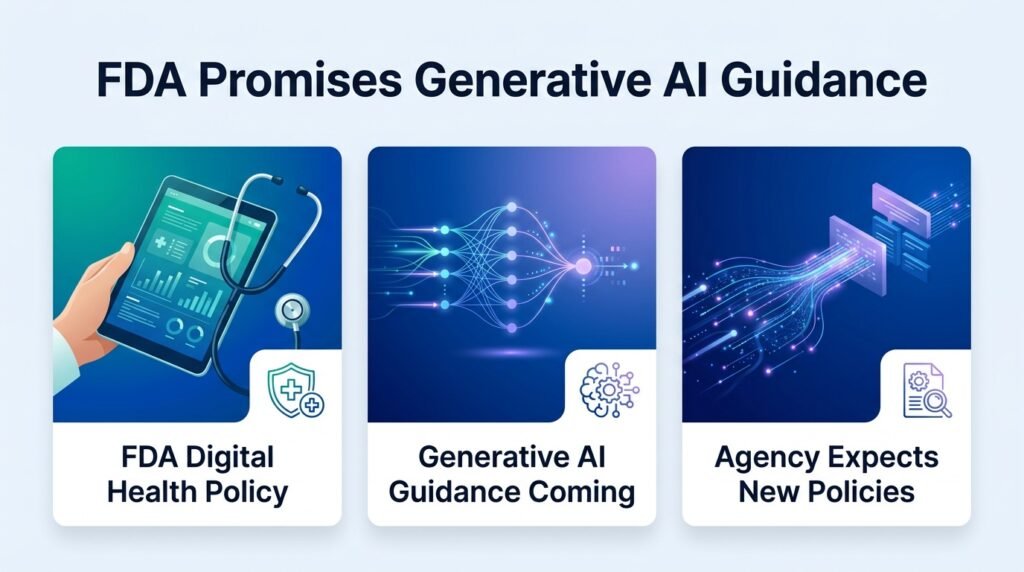
Regulators cannot evaluate a tool that changes its output daily using old premarket review playbooks. The agency’s digital health division is now drafting formal guidance to address these unique risks.
The proposed framework introduces a physician-credentialing-style competency model for premarket evaluation. This treats the AI more like a practicing clinician than a piece of hardware. It also demands continuous postmarket monitoring to catch performance degradation.
This shift acknowledges a hard truth. Static testing is dead. If an AI model evolves after it enters the clinic, the regulatory process must evolve with it.
The Innovation Bottleneck
This is not just about safety; it is about market access. Developers are eager to deploy generative models, but they face a regulatory vacuum.
The upcoming guidelines will decide whether clinical generative AI remains a niche experiment or becomes a standard medical tool. However, the agency must balance this safety net with political pressure to accelerate AI integration under the current administration.
Can a risk-based framework truly contain an algorithm that learns on the fly? The FDA is about to find out.