Yusuf Yesil, MD, MIS
Better Physics
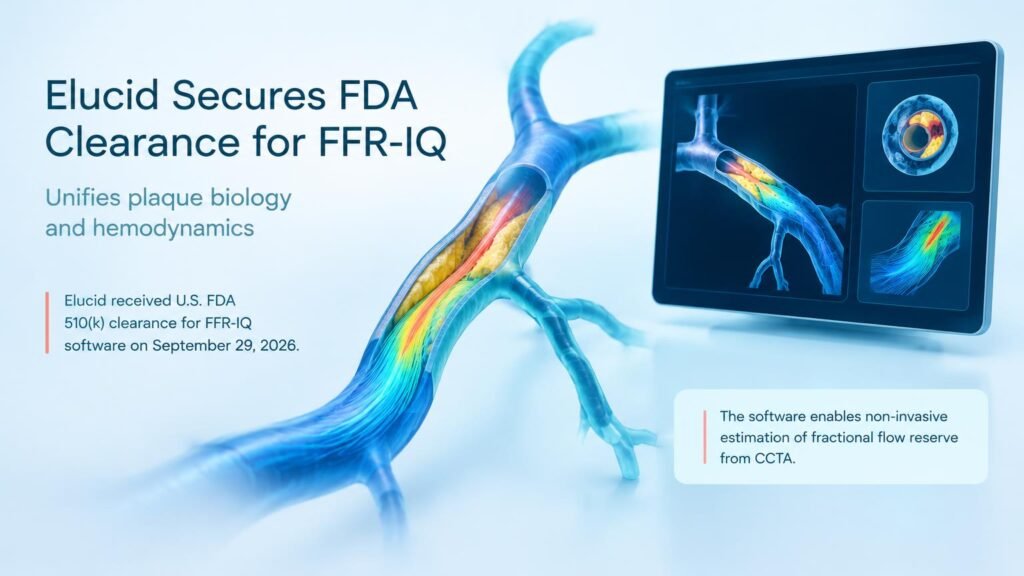
Determining whether a coronary blockage starves the heart of blood traditionally required threading a pressure wire directly into the artery. Software-based estimates changed that by using standard CT scans, but early tools focused almost entirely on vessel shape.
A newly cleared software platform changes the math by combining blood flow mechanics with detailed plaque composition analysis. In a retrospective study of 347 patients across multiple centers, the algorithm achieved 92.2% sensitivity and 93.1% specificity when compared against invasive pressure readings.
The Real Impact
By accounting for risky tissue like lipid-rich necrotic cores, the tool helps clinicians distinguish between stable blockages and high-risk lesions. This dual approach aims to reduce unnecessary diagnostic catheterizations, cutting both patient risk and hospital cost.
Retrospective performance does not guarantee identical results in routine clinical workflows. True utility hinges on how quickly radiology departments integrate the unified platform without slowing down reporting times.