

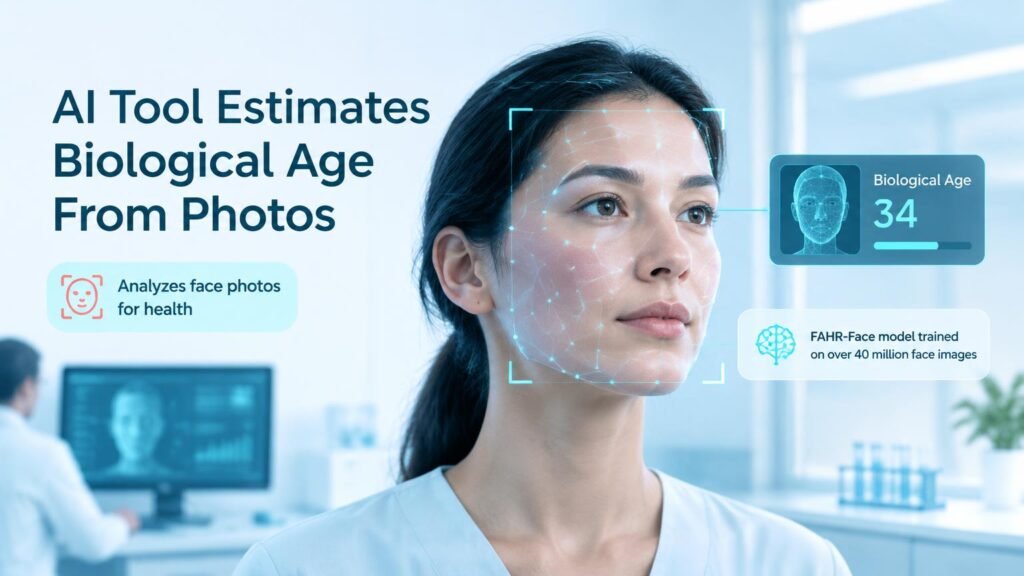
A routine photo of a patient’s face could soon help oncologists decide if aggressive chemotherapy will extend life or inflict unnecessary harm.
Oncologists frequently struggle to measure a patient’s physiological frailty before prescribing toxic treatments. Chronological age is a notoriously blunt metric that fails to capture how well an individual body copes with severe medical stress.
Reading Frailty in Features
To address this gap, researchers built two specialized tools from a foundation model trained on over 40 million facial images.
The first tool, FAHR-FaceAge, calculates biological age by evaluating subtle structural changes around the forehead and temples. The second tool, FAHR-FaceSurvival, assesses cancer mortality risk by analyzing features beneath the eyes and across the nose bridge.
Together, these noninvasive facial biomarkers offer care teams an instant, objective measure of physiological reserve. Instead of relying on subjective visual checks or time-consuming mobility testing, clinicians can use facial analysis to identify patients who might require modified treatment doses.
Limits of Algorithmic Screening
Facial features provide clues about systemic frailty, but they do not replace comprehensive medical evaluations. A photograph cannot reveal internal tumor genetics, organ function, or specific treatment resistance.
While a public study is underway to collect broader dataset variations, current performance must be validated across diverse populations before entering routine clinical workflows. High correlation in retrospective datasets does not guarantee safer treatment decisions at the bedside. For now, facial scoring serves as an emerging supportive metric rather than a standalone clinical authority.