The UK is betting £75 million that algorithms can replace animals in drug safety trials, but the regulatory hurdles remain immense.
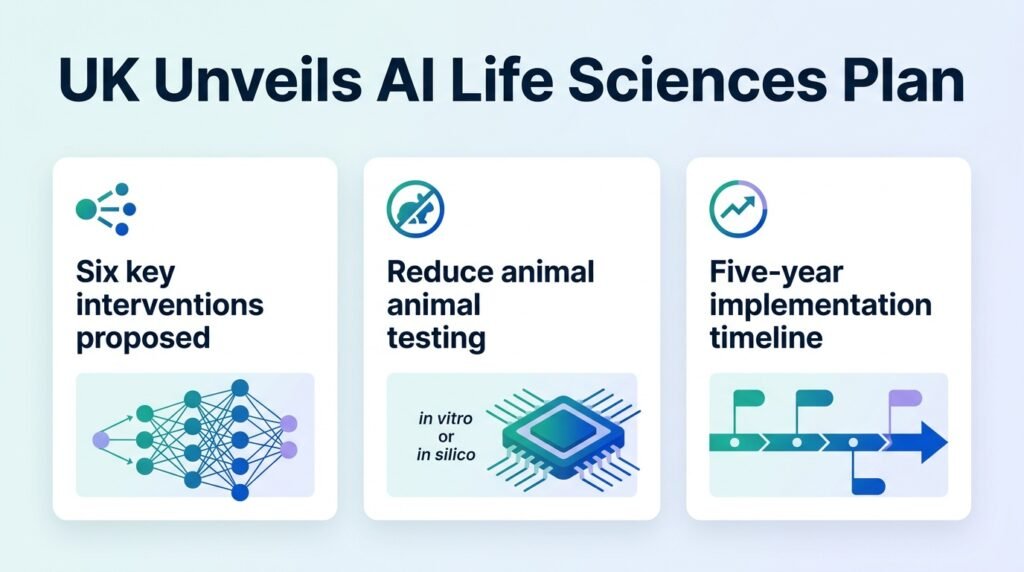
For decades, preclinical toxicology has relied on animal models that are slow, expensive, and often fail to predict human clinical outcomes. Now, a new national strategy aims to phase out these tests within five years using AI, organ-on-a-chip systems, and 3D bioprinting.
This is not just an ethical pivot. It is a bid for economic survival.
The geopolitical race
The UK is facing intense pressure from the US and China in the drug discovery pipeline. Without rapid AI integration, the nation risks losing its competitive edge. To counter this, a £75 million initiative aims to phase out animal testing, nested within a broader £2 billion Life Sciences Sector Plan to establish a leading life sciences economy by 2030.
But replacing living biology with code is a massive regulatory gamble.
The validation bottleneck
Regulators are notoriously risk-averse, and for good reason. To ease this transition, the MHRA is launching a regulatory sandbox to safely test AI tools.
The real challenge is not the technology itself, but validation. Can an AI model truly replicate the systemic complexity of a living organism? If the algorithms fail to predict rare toxicities, the human cost of clinical trial failures will be catastrophic.
If successful, this shift could slash drug development timelines and costs. If it fails, it could set regulatory trust in AI back by a decade. The transition will require unprecedented access to high-quality, AI-ready health data, which remains a notorious bottleneck in clinical research.