High-speed retinal imaging upgrades prioritize clinic throughput over diagnostic breakthroughs.
Eye clinics face a constant operational bottleneck: patient movement ruins optical coherence tomography angiography (OCTA) scans. When patients blink or shift, clinicians must restart the process, draining valuable clinic hours.
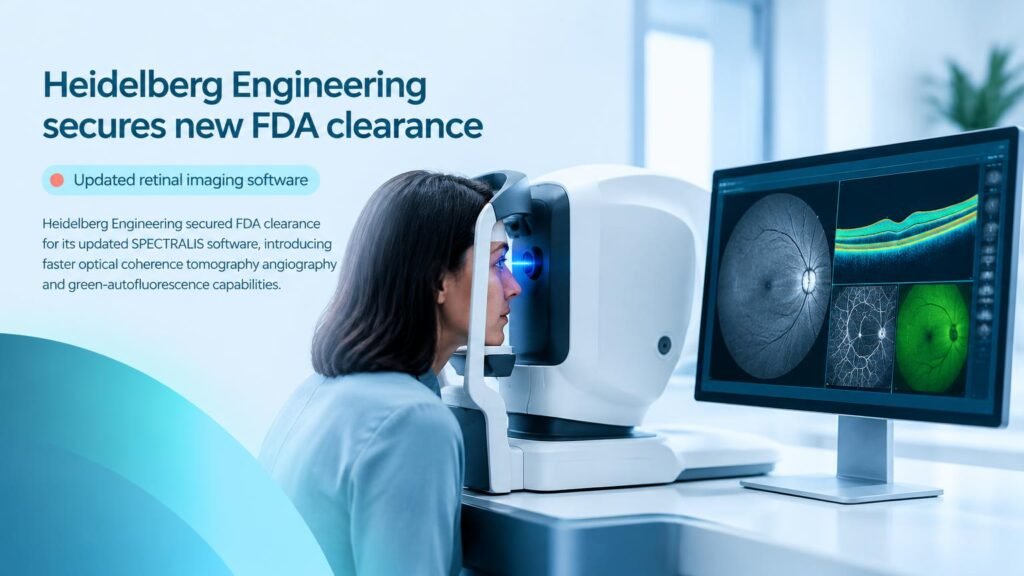
The latest regulatory clearance for high-speed retinal imaging software aims directly at this operational headache. By boosting scan speeds up to 250 kHz, the technology reduces the window for motion artifacts. This allows technicians to capture high-detail vascular imaging on the first attempt.
The Speed Tradeoff
Faster acquisition means patients spend less time staring into a lens. It streamlines the daily schedule of high-volume ophthalmic practices.
Yet, faster imaging is not a shortcut to better clinical decisions. High-speed scans and detailed vascular maps do not alter underlying pathology. A clearer image of macular degeneration or diabetic retinopathy helps with documentation, but it does not inherently change the treatment threshold. The introduction of green-autofluorescence alongside high-speed OCTA offers more layers of data, but more data can lead to over-diagnosis if clinicians react to sub-clinical variations.
Clinicians must distinguish between operational efficiency and actual diagnostic accuracy. A faster scan does not prove a tool can replace clinical judgment.
Implementation Hurdles
The modular nature of these imaging platforms means clinics must choose which upgrades to fund. Upgrading software to access these speeds represents a capital decision, not just a clinical one. Furthermore, faster data generation increases the storage and review burden on clinic networks.
The practical takeaway is clear. Invest in speed to solve workflow bottlenecks, not to find diseases that slower scans would have missed.