A massive genomic database is worthless if it cannot cure human disease.
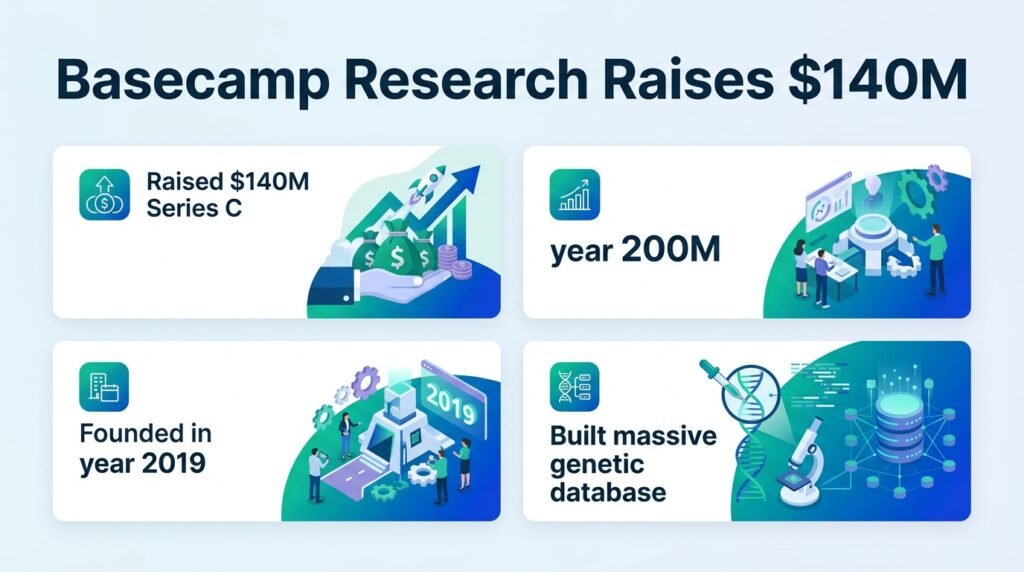
Basecamp Research spent years collecting exotic genetic sequences from volcanoes and deep-sea vents. Investors bought the vision, funding a $140 million Series C round that values the London startup at $800 million. Backers like Nvidia and Roche’s vice chairman are betting on the company’s “Trillion Gene Atlas.”
But the real story is not the cash. It is how Basecamp plans to use it.
The pivot to pipeline
The company is transitioning from a data provider to an active drug developer. Armed with its 28-billion-parameter EDEN model, Basecamp is launching a six-program preclinical pipeline. This includes in vivo CAR-T therapies for cancer and gene insertion for metabolic disorders.
To accelerate this shift, Basecamp acquired patents from the defunct Tome Biosciences. This is a calculated shortcut. By combining Tome’s genomic integration tech with its own AI-designed proteins, Basecamp hopes to reprogram cells directly inside the human body.
High stakes, unproven biology
It is a bold strategy, but highly risky. Preclinical pipelines are notoriously prone to failure. AI can predict novel protein structures, but it cannot guarantee how those proteins behave in the chaotic environment of a human clinical trial. Basecamp is no longer just selling software or data access. It is now playing the expensive, slow game of traditional drug development.
The transition tests a fundamental question in biotech. Can proprietary, extreme-environment data actually generate better clinical outcomes, or is it just a highly marketed computational exercise? Basecamp has built the map. Now it must prove it can navigate the clinic.