
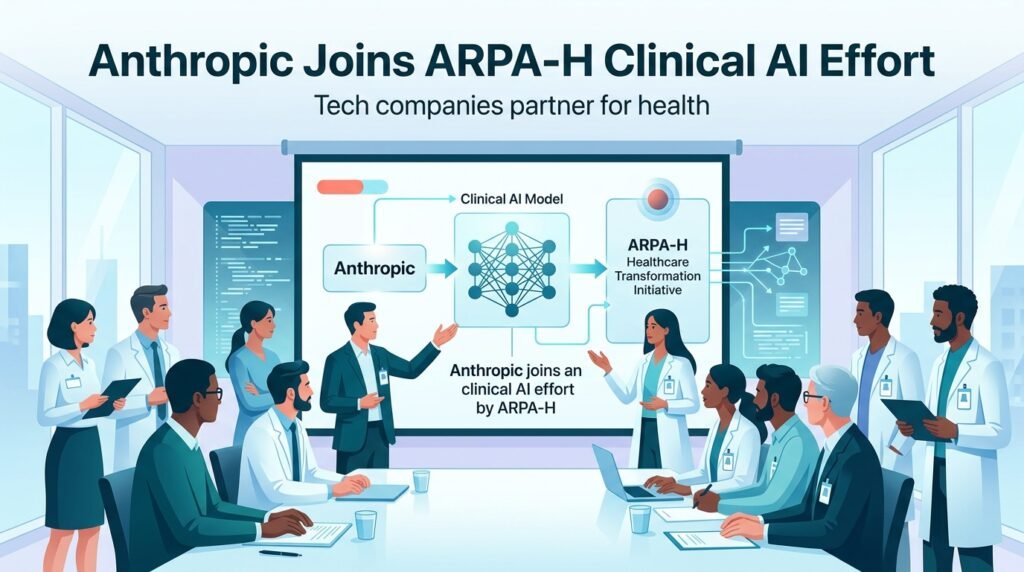
A federal agency is betting $62.7 million that autonomous AI agents can safely manage heart failure patients without direct human oversight.
Anthropic has joined ARPA-H’s ADVOCATE program, a high-stakes initiative to build the first FDA-authorized autonomous AI agents for clinical care. This is not another copilot designed to draft doctor notes or schedule appointments. This project aims to let algorithms actively manage chronic disease and make clinical decisions.
The Autonomy Gamble
Moving from administrative AI to autonomous clinical decision-making is a massive leap. The ADVOCATE program targets heart failure, a complex condition where medication adjustments require a delicate balance. If an AI miscalculates a dosage, the patient ends up in the emergency room. The clinical stakes could not be higher.
Yet, the federal government is pushing forward. The initiative aligns with efforts to establish Medicare reimbursement pathways for clinical AI. This financial carrot could accelerate adoption faster than clinical consensus can form, forcing health systems to adapt to autonomous workflows.
The Safety Gap
For Anthropic, this is a strategic land grab. Winning federal backing for autonomous clinical agents establishes a regulatory moat that commercial rivals will struggle to cross. The tech giant is expanding its footprint in life sciences, backed by its new biology research group.
However, the aggressive push into autonomous, prescription-writing AI has sparked intense debate. Critics warn about the lack of human-in-the-loop oversight. Can a probabilistic model handle the chaotic reality of human biology? While the promise of scaling specialized care to underserved areas is real, the margin for error in autonomous medicine is zero.