
Algorithms can now flag the earliest signs of lung cancer, but technology alone cannot fix a broken healthcare pipeline.
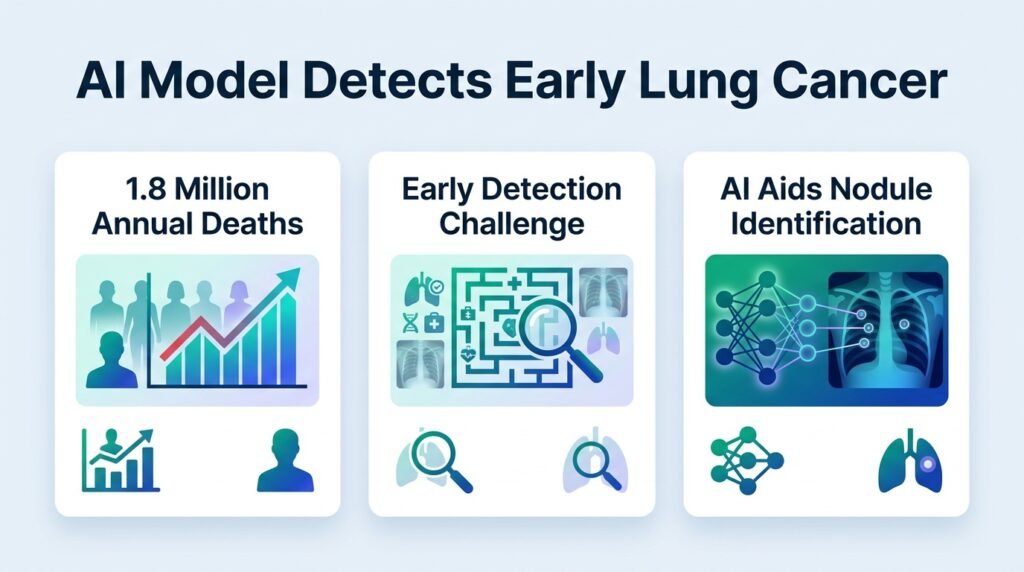
Lung cancer kills 1.8 million people every year, accounting for nearly one in five cancer deaths. The primary culprit is time. Early-stage tumors appear as tiny, microscopic nodules that easily blend into healthy tissue, escaping even the sharpest human eyes.
AI models are changing the detection threshold. Tools like MIT’s Sybil and Median Technologies’ eyonis are spotting these microscopic threats long before they turn deadly. Even the UK’s NHS is testing AI paired with robotic biopsy cameras to target these elusive nodules.
The bottleneck problem
But finding a tumor faster does not mean treating it sooner. This is the hard truth of clinical AI integration.
The recent LungIMPACT clinical trial exposed a frustrating reality. While AI significantly cuts down the time it takes to analyze and report on a scan, patients still face the same old systemic delays.
A fast algorithm cannot schedule a biopsy. It cannot create more clinic slots or hire more oncologists.
A systemic rewrite
To save lives, healthcare systems must integrate these tools into a smarter workflow. Glasgow’s SWIFT-Lung study is evaluating AI-enabled triage to solve this exact problem.
We must stop treating AI as a standalone miracle. It is one link in a very long clinical chain.
If hospitals do not fix their administrative bottlenecks, the fastest diagnostic AI in the world will just help patients wait for treatment with a faster diagnosis. True progress requires matching algorithmic speed with operational capacity.