
Machine learning models can identify which fibromyalgia patients will benefit from brain stimulation before therapy starts.
Non-invasive brain stimulation often produces inconsistent results in clinical practice because individual responses vary wildly. A secondary trial analysis demonstrates that predictive algorithms can spot likely responders before clinicians administer ten daily sessions of electrical stimulation. This approach moves brain stimulation away from trial-and-error prescribing toward targeted patient selection.
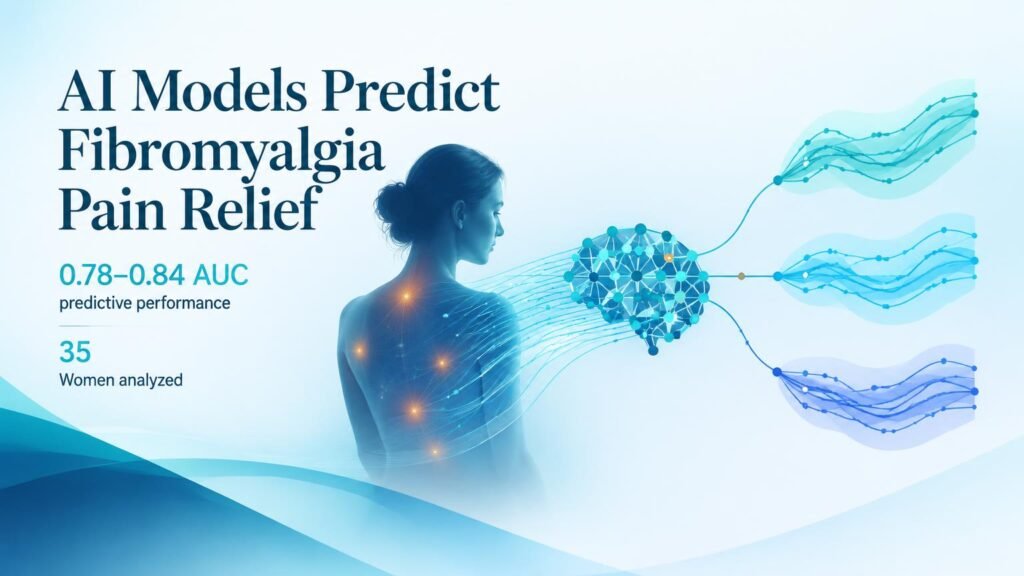
Researchers analyzed data from a triple-blind clinical trial involving 35 women diagnosed with fibromyalgia. Participants were randomly assigned to sham stimulation or active anodal M1 stimulation delivered at 2 mA for 20 min across 10 sessions. Pain scores were measured using a visual analog scale at baseline, D10, D30, and D90.
What drives treatment success
Active brain stimulation delivered greater pain relief than sham treatment at every follow-up checkpoint through D90 (p < .001). Six supervised algorithms classified treatment responders, defined as individuals achieving a ≥30% pain reduction. These models demonstrated consistent predictive performance, achieving AUC values between 0.78 and 0.84.
Baseline health profiles dictated treatment success. Higher scores in physical and psychological quality of life served as the strongest positive predictors of pain relief. Conversely, higher fibromyalgia impact scores and active antidepressant use significantly lowered the probability of a positive response.
Longitudinal modeling identified three distinct response patterns: rapid responders, progressive responders, and non-responders. CATE analysis showed that patients gained the largest treatment advantage when they entered therapy with moderate baseline pain scores of 6–8, strong psychological quality of life, and no antidepressant prescriptions.
That disconnect challenges standard clinical intuition. Severe symptoms often trigger aggressive interventions, yet patients with high baseline impact scores and complex drug regimens proved least responsive to standard M1 stimulation.
Key Study Findings
- Active stimulation maintained pain reduction superior to sham through D90 (p < .001).
- Supervised algorithms identified treatment responders with AUC values ranging from 0.78–0.84.
- Peak treatment benefit occurred in patients with moderate pain (6–8 VAS), high psychological QoL, and no antidepressant use.
Limits and practical reality
The clear bottleneck in these findings is scale. Developing predictive algorithms on a cohort of just 35 participants from a single trial site creates a high risk of overfitting, meaning these models cannot replace clinical judgment without external prospective validation.
For pain clinics, these results offer a practical screening guide rather than an automated decision tool. Clinicians should evaluate baseline psychological quality of life and medication profiles to avoid placing low-probability candidates through intensive stimulation protocols.
Read the original research in the British Journal of Pain.