
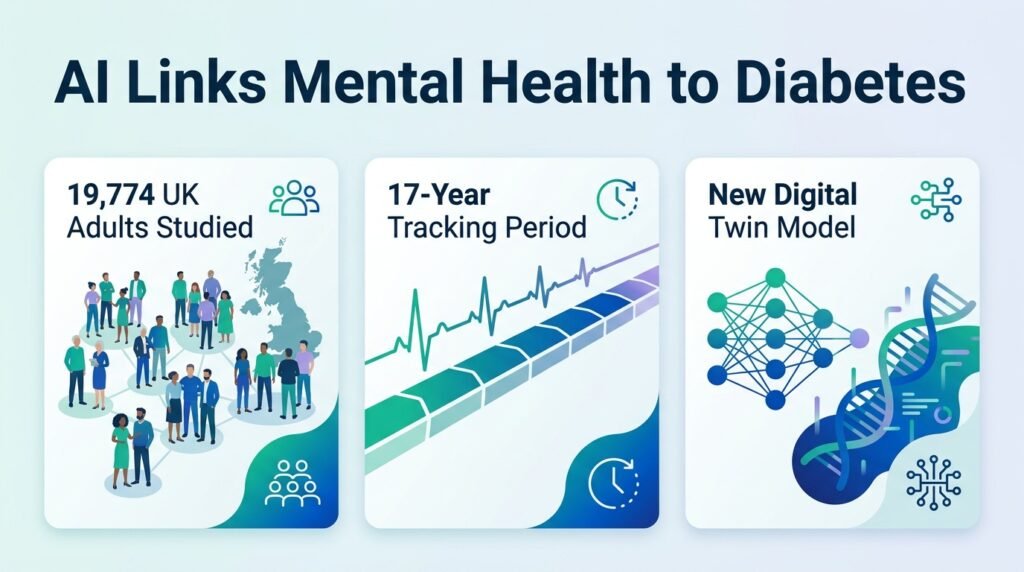
A digital twin model proves that mental health is not just a quality-of-life issue but a direct driver of chronic physical disease.
For decades, medicine treated metabolic disease and mental health as separate silos. If you had type 2 diabetes, clinicians focused almost exclusively on diet, weight, and insulin.
That silo is collapsing.
The Digital Twin Shift
A new analysis using a digital twin AI model analyzed data from 19,774 UK adults tracked for up to 17 years. The simulation revealed that loneliness, insomnia, and poor mental health substantially raise a person’s future risk of developing type 2 diabetes.
This is not just a correlation. The model suggests these psychosocial factors are active drivers of metabolic decline.
This shifts the clinical burden. We can no longer treat chronic metabolic conditions by looking only at physical biomarkers. If the mind is stressed, the body’s chemistry follows.
But there is a catch.
Limits of the Model
While digital twins can map complex lifestyle interactions, they rely heavily on historical datasets. These models predict risk, but they do not automatically solve the systemic social isolation causing the risk in the first place.
Furthermore, translating these predictive simulations into daily clinical practice remains a hurdle. Doctors need actionable tools, not just complex risk scores.
If healthcare systems want to prevent diabetes, they must prescribe community and sleep support, not just metformin. The math is clear: mental health is metabolic health.