
Machine Learning Optimizes Artificial MicroRNA Efficacy
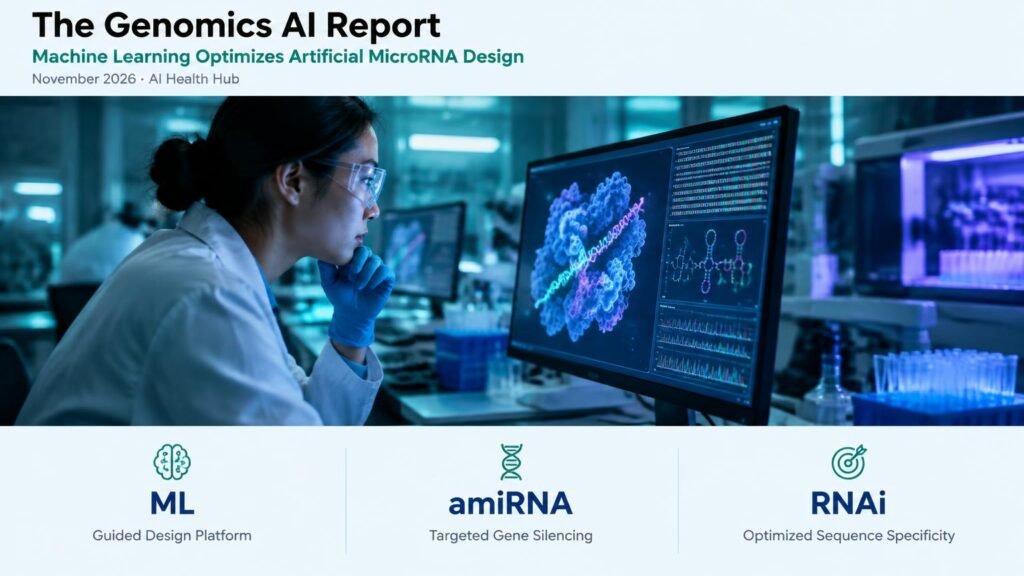
Artificial microRNAs (amiRNAs) represent a powerful strategy for sequence-specific gene silencing in RNA interference therapies, but rational engineering has long been bottlenecked by unpredictable sequence-structure-processing dynamics. A computational study published in Molecular Therapy — Nucleic Acids demonstrates that machine learning models can navigate these complex structural interactions to systematically optimize amiRNA knockdown efficiency and targeting specificity.
Addressing Sequence and Processing Complexity
Traditional candidate selection for gene silencing relies heavily on heuristic rules that frequently fail to predict intracellular processing efficiency or off-target interactions. To resolve this challenge, researchers developed miRarchitect, a web-based platform that applies predictive machine learning algorithms to evaluate structural features, thermodynamic stability, and processing signals. By evaluating high-dimensional sequence-structure relationships simultaneously, the computational framework enables researchers to design custom amiRNA constructs tuned for specific transcript targets while minimizing unintended gene suppression.
Validation Bottlenecks and Translational Meaning
While algorithmic modeling significantly narrows the vast candidate search space for RNA interference therapeutics, in silico optimization is not a substitute for extensive functional bioassays. Predictive models reflect training data distributions and cannot completely forecast host cell-specific RNA-binding protein dynamics, secondary structure variations in target transcripts, or in vivo delivery kinetics. Consequently, candidate amiRNAs generated by machine learning platforms require rigorous laboratory validation in relevant disease models before translational progression.
For genomic medicine researchers and RNA therapeutic developers, this computational approach provides a scalable tool to streamline early-stage target validation and payload design. By replacing empirical trial-and-error with machine learning-guided candidate ranking, research teams can reduce initial screening timelines while systematically prioritizing high-specificity artificial microRNA candidates for pre-clinical development.