
Continuous biometric tracking can alert clinicians to dangerous blood pressure spikes long before patients land in the emergency room.
A hypertensive crisis does not happen in a vacuum. Days before blood pressure surges past 180/120 mm Hg, subtle signals begin to emerge. Abnormal nighttime blood pressure patterns and sharp morning spikes often warn of impending end-organ damage, but standard point-in-time clinic visits miss them entirely.
Early Signals, Actionable Windows
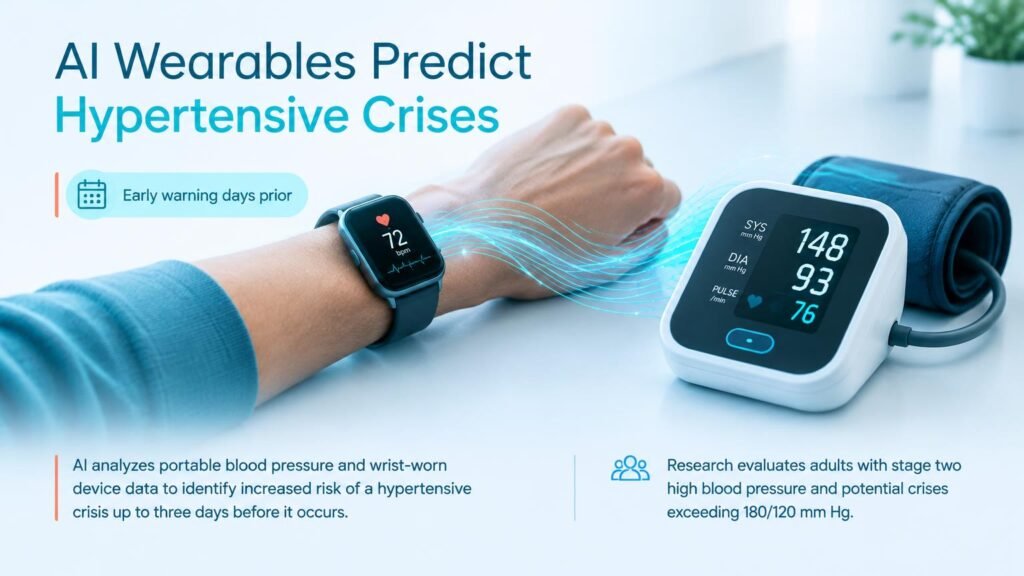
Machine learning models analyzing data from portable cuff-based monitors and wrist-worn wearables can now detect these pre-crisis trajectories up to three days in advance in adults with stage 2 hypertension. That multi-day buffer transforms emergency management into preventive care. Instead of treating acute stroke or kidney failure in an ICU, clinicians gain a window to adjust outpatient medications.
This is a shift from reactive monitoring to predictive intervention.
The Limits of Early Data
These findings remain preliminary. Identifying risk patterns in retrospective or observational cohorts does not automatically equal better patient outcomes. Standardized alert protocols must be established so health systems are not overwhelmed by false alarms.
Until prospective clinical trials prove these algorithms reduce hospitalizations without spiking clinician workload, consumer wearables will remain screening tools rather than diagnostic replacements.