Yusuf Yesil, MD, MIS
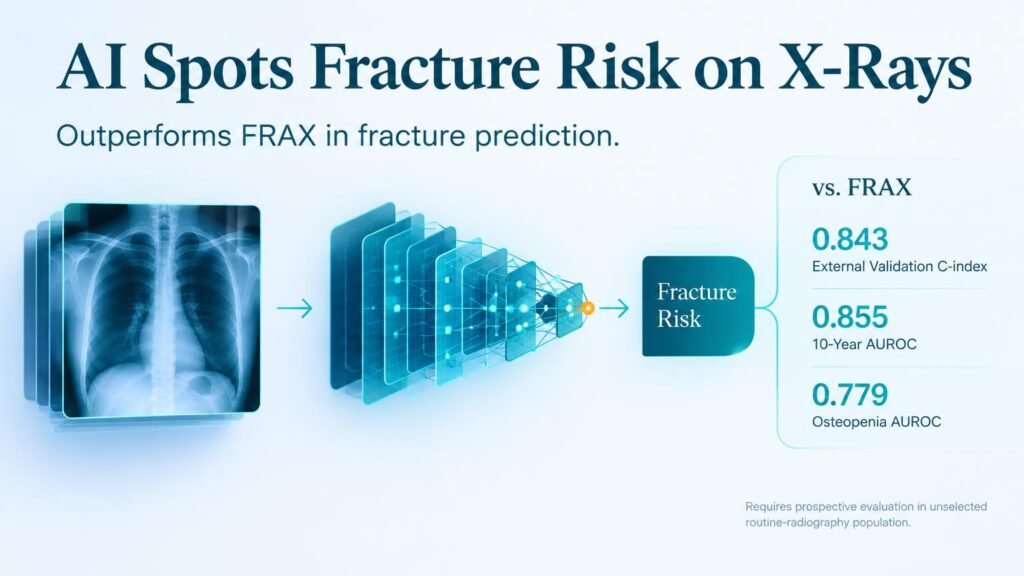
Traditional screening guidelines miss vast populations who fall outside standard risk profiles. Men, younger adults, and people with normal body mass indexes rarely receive dual-energy X-ray absorptiometry (DXA) scans. As a result, silent bone loss routinely goes undetected until a major fracture occurs.
Opportunistic Detection at Scale
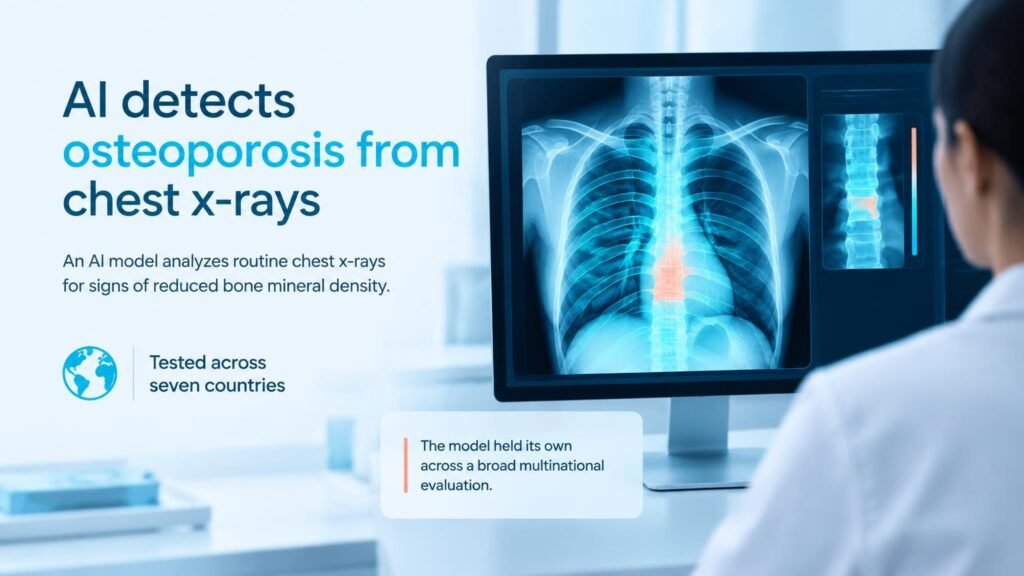
A multinational deep-learning model promises to change that equation by repurposing low-cost, ubiquitous imaging. By analyzing routine chest X-rays for reduced bone mineral density, the algorithm identified early structural weakness across seven countries with high sensitivity compared to traditional DXA scans.
This approach transforms passive medical records into active screening tools. It expands preventative monitoring without requiring new hardware, extra radiation exposure, or added clinical visits.
Accuracy Is Not Implementation
Finding low bone density on an X-ray does not automatically translate to improved patient care. Diagnostic accuracy in retrospective trials is distinct from real-world clinical impact.
While initial trials link AI-driven screening to reduced long-term fracture rates, integrating automated alerts into overburdened electronic health record systems remains a major operational hurdle. Radiologists must validate whether automated flags lead to actual treatment or simply generate administrative noise.
The practical path forward is targeted integration. Healthcare systems should deploy opportunistic screening as a triage tool for high-risk flags rather than treating every algorithmic output as a definitive diagnosis.