 Yusuf Yesil, MD, MIS
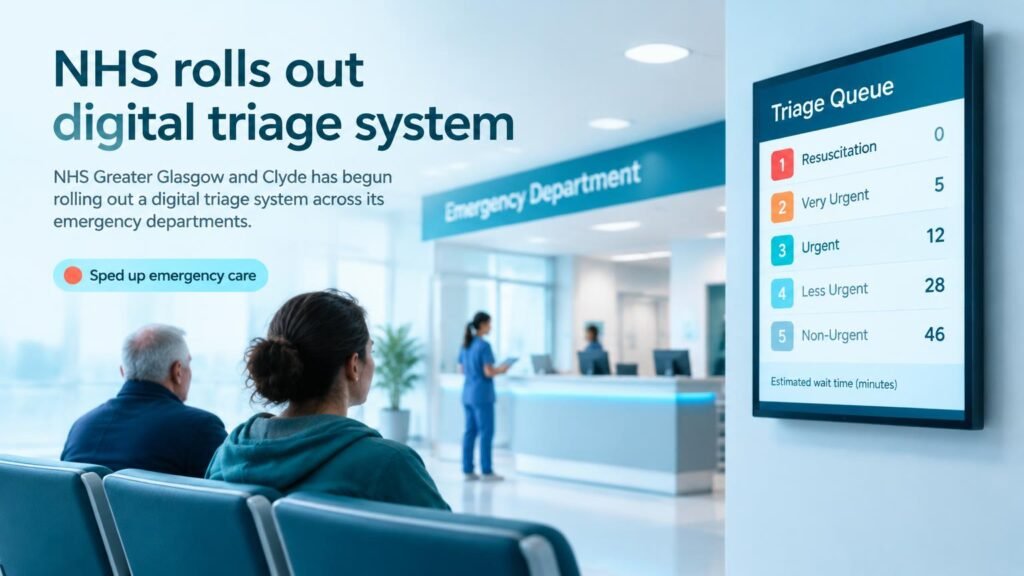
Self-service kiosks are taking over initial emergency room intake across Scotland’s largest health board.
Patients arriving at emergency departments within NHS Greater Glasgow and Clyde now check in using touchscreen kiosks rather than waiting to speak immediately with reception staff. The system collects structured symptom data within minutes to help medical teams prioritize critical cases.
Bypassing the Desk
The roll-out across four major hospitals attempts to solve a chronic operational bottleneck: unscheduled arrivals choking emergency waiting rooms. By digitizing the initial intake, the health board aims to identify deteriorating patients faster while steering non-urgent cases toward virtual consultations or minor injury units.
Replacing initial human conversation with algorithm-driven questionnaires changes how care begins. While traditional reception desks remain open to maintain access, the primary operational flow shifts toward automated self-reporting.
Early Intake Versus Real Care
Faster data entry does not automatically translate to reduced waiting times or better health outcomes. Collecting structured patient data in minutes optimizes the intake queue, but it cannot fix downstream bed shortages or physician staffing constraints.
Symptom-checking software relies entirely on accurate self-reporting by patients who may be distressed, confused, or experiencing atypical symptoms. Until multi-site outcome data proves these kiosks safely reduce wait times without missing subtle clinical risks, the system remains a front-door management tool rather than a cure for emergency department overcrowding.