
When we test models in clean environments, they look ready to replace human judgment. But watching these deployment trials play out this week shows me that real-world deployment is where clinical AI actually faces its hardest tests.
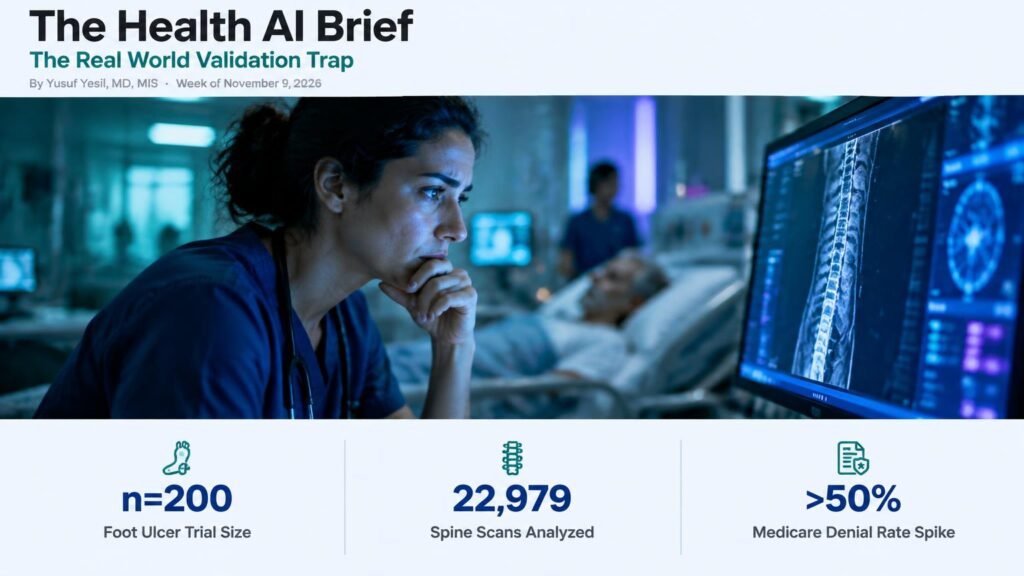
🔹 AI Predicts Diabetic Foot Ulcer Outcomes — A prospective trial of n=200 patients showed improved physician recommendation scores when using multi-outcome AI guidance.
When I was building models at Yesil Health, I realized recommendations are useless if they don’t fit clinic workflow. This prospective data is promising, but we need to see long-term wound healing rates.
🔹 AI Maps Normal Spine Aging Across 22,979 Adults — Analysis of 22,979 asymptomatic adult spine MRIs maps structural aging to prevent over-diagnosis.
As clinicians, we constantly struggle with incidental MRI findings that cause unnecessary operations. Quantifying what ‘normal aging’ looks like at scale gives us a much-needed baseline.
🔹 Medicare Automated Denial Pilot Triggers High Rejections — Federal automated prior authorization audits caused chaos with initial rejection rates soaring above 50%.
If you’re building payer-side automation, using uncalibrated rules engines to auto-deny claims only creates administrative friction and clinical delays.
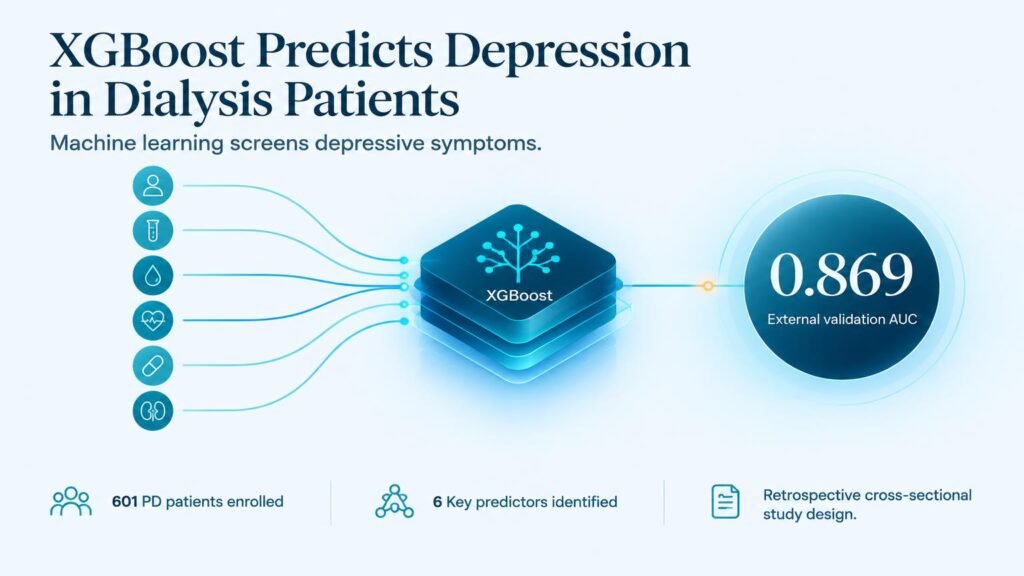
🔹 AI Model Predicts Wasting in Dialysis Patients — Combining standard blood markers with machine learning spots metabolic wasting in kidney failure early.
Using simple routine lab data instead of complex novel biomarkers makes this directly usable in standard clinical workflows next week.
🔹 AI Cardiac Scans Outperform Clinicians in Predicting Survival — Automated heart MRI analysis cuts scan reading times from minutes to seconds while improving long-term mortality prediction.
The speedup from minutes to seconds is great for radiology throughput, but we must verify if automated contouring holds up across diverse scanner hardware.
🔹 Machine Learning Finds No Hypothermia Benefit After Cardiac Arrest — Machine learning re-analysis of landmark trial data confirms cooling to 33°C yields zero benefit over standard fever control.
This is a solid sanity check against medical hype; advanced analytics can prevent us from continuing expensive, invasive protocols that don’t help patients.
🔹 Samsung Smart Ring Tracks Hourly Sleep Disruption — Consumer wearables move toward clinical screening by capturing continuous sleep fragmentation metrics.
For builders, consumer hardware is moving fast, but transforming noisy photoplethysmography data into FDA-cleared diagnostic metrics remains a steep regulatory hill.
🔹 Four Proteins Improve AI Prediction of Kidney Disease — Adding a panel of 4 blood proteins to demographic baselines enhances long-term chronic kidney disease forecasting.
I like seeing biomarker panels paired with basic data, but adding prospective lab costs means health systems will demand clear ROI before ordering them.
🔹 HHS AI Rule Shifts Evaluation Risk to Hospitals — Federal deregulation lowers developer compliance overhead while forcing health systems to vet clinical AI locally.
Health systems aren’t equipped to act as mini-FDAs. If you’re selling to hospitals, expect longer procurement cycles as internal validation burdens shift to their IT teams.
🔹 AI Stroke Tools Miss Half of Distal Occlusions — Commercial stroke AI triage software fails to detect up to 50% of distal vessel blockages in emergency room settings.
A 50% missed call rate on distal blockages is unacceptable for emergency triage; relying on AI as a primary screen risks missing time-sensitive interventions.