
Automated diabetes care is finally moving past the pump.
For years, the most advanced diabetes technology remained locked behind expensive insulin pumps. This left the vast majority of patients—specifically the eight million Americans with Type 2 diabetes who rely on daily injections—stuck with static, outdated dosing regimens. They had to wait months between doctor visits just to get their insulin adjusted.
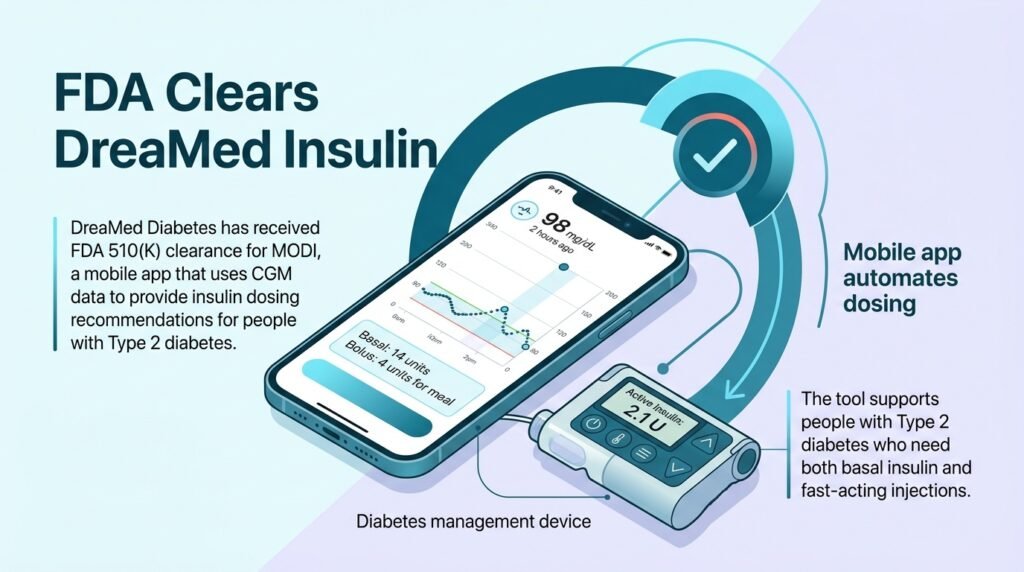
That barrier is dissolving. The FDA has cleared DreaMed’s MODI app, a prescription-only tool that uses continuous glucose monitor data to recommend insulin doses directly to patients. It covers both basal and fast-acting injections.
The shift to injections
This is a crucial pivot in clinical strategy. Historically, automated dosing algorithms targeted Type 1 patients using continuous infusion pumps. But pump users are a minority. About 85% of insulin users rely on daily injections.
By bypassing the pump requirement, this clearance brings algorithmic precision to a massive, underserved market. It removes the clinician as a constant bottleneck. Patients get immediate, data-driven adjustments without waiting for their next clinic appointment.
The clinical reality
But autonomy comes with questions. How will primary care physicians, who manage most Type 2 patients, handle patients adjusting their own doses via an app? While the app reduces administrative delays, it shifts significant responsibility to the patient.
Success will depend on real-world adherence. If patients ignore the app’s recommendations or struggle with the interface, the clinical benefits will evaporate. Algorithms can calculate the perfect dose, but they cannot force a patient to inject it. This is a major step forward, but the real test is how patients behave outside the clinic.