
Connecting hospital databases was supposed to solve the digital health puzzle, but generative AI is proving that raw data pipelines are useless without a shared vocabulary.
For years, the industry chased technical connectivity. Standards like HL7 FHIR successfully built the pipes to move patient records across systems. But moving data is not the same as understanding it.
The Context Trap
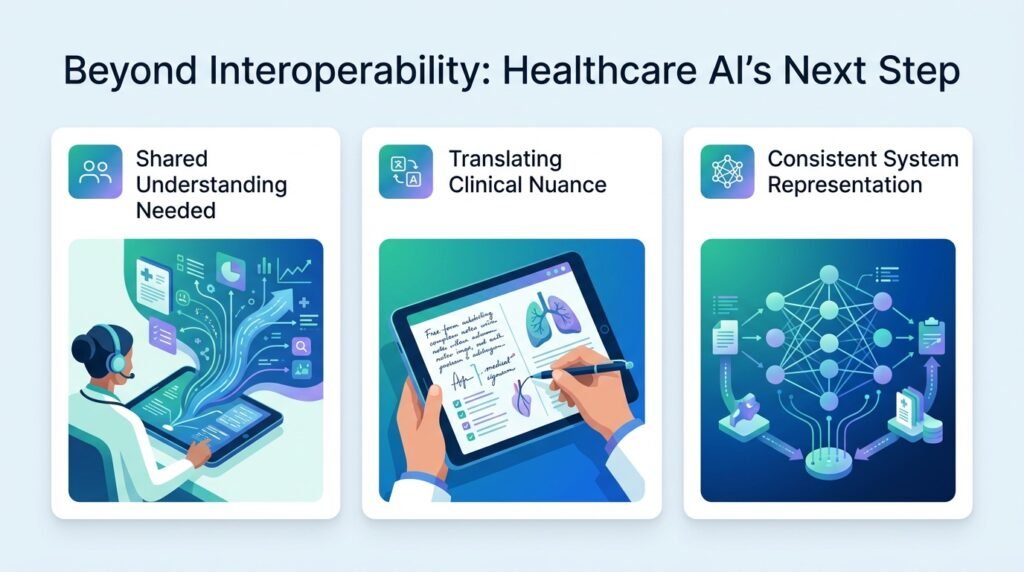
Generative AI requires clinical nuance, not just raw text. When one system records “heart failure” and another logs “congestive cardiac insufficiency,” a human doctor translates the overlap instantly. An algorithm often cannot. Without harmonized terminologies, massive data integration projects simply produce volume without value.
This is the quiet crisis of the AI transition. The rush to adopt generative tools has exposed a fundamental readiness problem. Many executives assumed that because their data was accessible, it was usable. It is not. AI demands a level of precision that legacy database architectures were never designed to provide.
If a model misreads a patient’s history, downstream clinical decisions are compromised.
The Next Hurdle
True safety requires semantic interoperability. This means systems must interpret clinical data consistently without losing the original clinical intent. Achieving this requires structured data frameworks and expert-validated models. It means clinical governance must catch up to software engineering.
Until then, throwing more data at AI will only scale the errors. The industry must stop celebrating connected pipes and start focusing on shared clinical logic.