As cancer costs threaten to balloon by a third, insurers are bypassing traditional clinics to put advanced screening directly into the workplace.
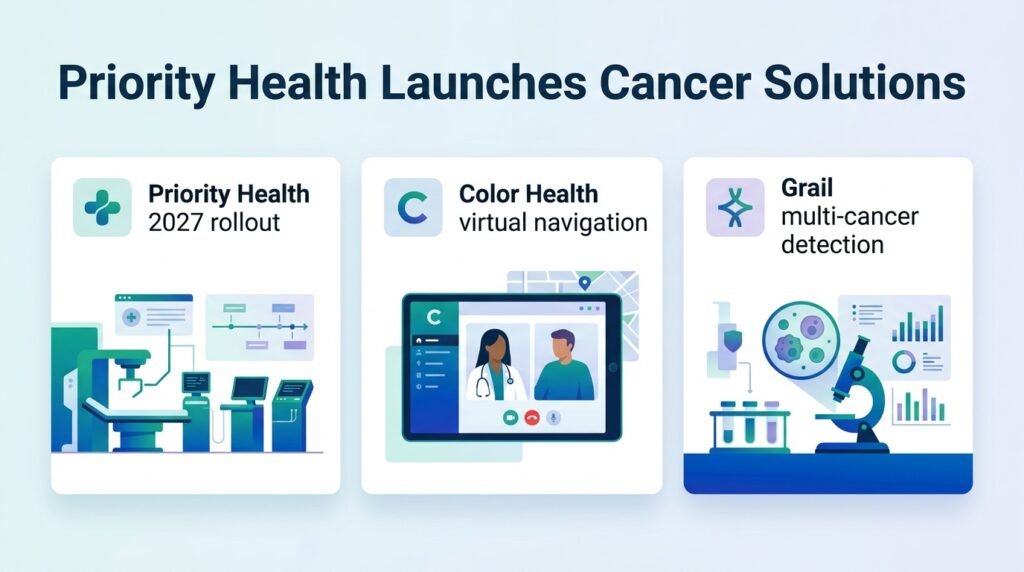
Michigan insurer Priority Health is expanding its partnership with Grail and Color Health to offer multi-cancer early detection and virtual navigation to self-funded employers starting in 2027. This moves Grail’s Galleri blood test from Medicare Advantage plans directly into the commercial employer market.
The Financial Gamble
Cancer costs are projected to increase 34% by 2030. At the same time, oncology clinics are seeing a worrying spike in younger, working-age diagnoses. For self-funded employers, a single late-stage cancer diagnosis can easily devastate an annual health benefit budget.
By offering virtual navigation alongside early blood-based detection, the goal is to catch tumors before they become catastrophic financial and clinical liabilities. But this strategy relies on a delicate assumption. Screening is only as good as the follow-up.
The Integration Hurdle
Multi-cancer early detection tests are highly sophisticated. However, they can also create immense anxiety and diagnostic confusion if not managed tightly. This is why the integration of a virtual clinic is the real test of this initiative.
If virtual navigators cannot seamlessly guide a patient from a positive blood test to a local oncologist, employers will simply end up paying for expensive screenings that lead to fragmented, high-cost care. The success of this model hinges not on the technology of the blood test, but on the logistics of the clinical handoff.
Employers are increasingly acting as direct healthcare coordinators. If this partnership succeeds, it will provide a blueprint for managing high-cost chronic diseases outside the traditional hospital system. If it fails, it will be an expensive lesson in the limits of virtual-first diagnostics.