

Silicon Valley is betting billions that AI agents can run clinical workflows without human intervention, but the messy reality of hospital operations is pushing back.
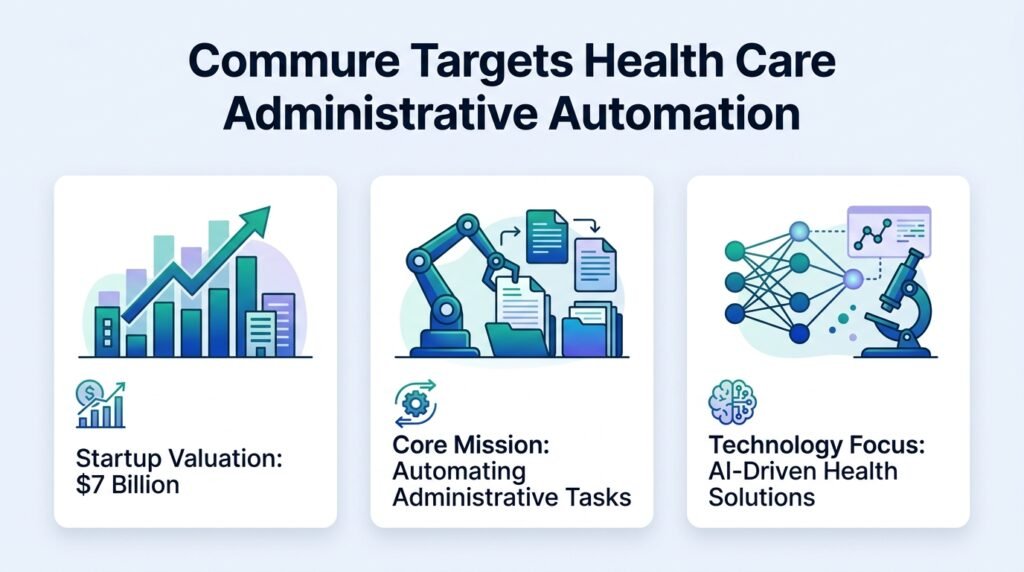
The dream of the fully automated hospital is driving a massive investment boom. Commure, a healthcare automation startup, recently secured a $7 billion valuation to tackle the industry’s $1 trillion administrative burden. By acquiring companies like Augmedix and Athelas, the firm is attempting to build an all-in-one platform.
But there is a vast gulf between writing code and navigating the chaotic plumbing of modern health systems.
The Autopilot Gamble
Most healthcare AI tools act as “copilots” that assist doctors. The new frontier is “agentic AI,” where software agents operate on autopilot. These tools are designed to handle everything from patient intake to complex billing without constant human oversight.
Investors are pouring money into this vision. Commure raised a $70 million growth round in May 2026, backed by venture giants like General Catalyst and Sequoia Capital.
Yet, automating administrative tasks is not just a software problem. It is a human and regulatory minefield.
The Integration Trap
Hospitals run on fragmented, legacy software systems that do not talk to each other. Forcing autonomous agents into these broken workflows often creates new errors rather than solving old ones.
If an AI agent misclassifies a billing code or misses a critical patient intake detail, the financial and clinical fallout falls on the provider, not the startup.
Furthermore, clinical staff are already suffering from technology fatigue. Forcing doctors to supervise “autonomous” systems that still require constant double-checking defeats the purpose of automation.
The rush to automate risks replacing human bureaucratic friction with digital chaos. Tech companies must prove their autonomous agents can handle the messy, unstandardized realities of medicine before they can justify their multi-billion-dollar price tags.