
Automating clinical notes was the easy part, but the real administrative crisis happens after the patient leaves the room.
For years, health systems rushed to deploy ambient AI scribes to rescue clinicians from keyboard fatigue. It worked for documentation, but it ignored the rest of the shift. Doctors and nurses are still drowning in billing codes, order entries, and manual shift handoffs.
Adding fragmented digital tools to solve these individual problems often backfires. It creates a disjointed workflow that actually increases cognitive load.
The Next Friction Point
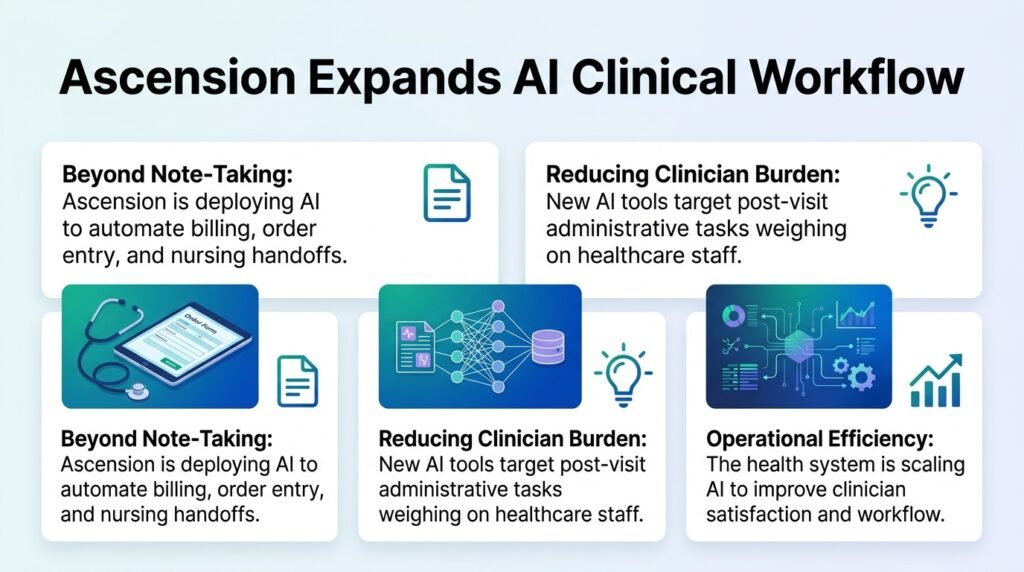
Ascension is shifting its strategy to target these post-visit bottlenecks. Instead of just capturing conversations, the health system is deploying AI to automate complex backend operations.
This includes streamlining nursing handoffs and automating order entries. The goal is to eliminate the silent administrative work that eats up to half of a clinician’s workday.
But this shift is not simple.
The Integration Trap
Automating billing and order entry requires deep integration with legacy electronic health records. If the AI makes an error in billing or orders, the clinical and financial stakes are much higher than a typo in a patient note.
To succeed, health systems must maintain human-in-the-loop oversight. AI cannot operate in a vacuum when clinical decisions and revenue cycles are on the line.
The lesson for healthcare leaders is clear. Scribes are a temporary band-aid. The real victory lies in automating the invisible operational workflows that keep clinicians tethered to screens long after patients go home. This is where staff retention will be won or lost.